SHEPHERD’S PIES
THE BEST OF THE BRITISH ISLES · 2026
The Shepherd’s Pie Guy
Shepherd’s Pies from the British Isles
By Mark Withey
Imprint
Contents
Shepherd’s Pies from the British Isles
Dis-connect to re-connect.
Mark · The Shepherd’s Pie Guy
Preface
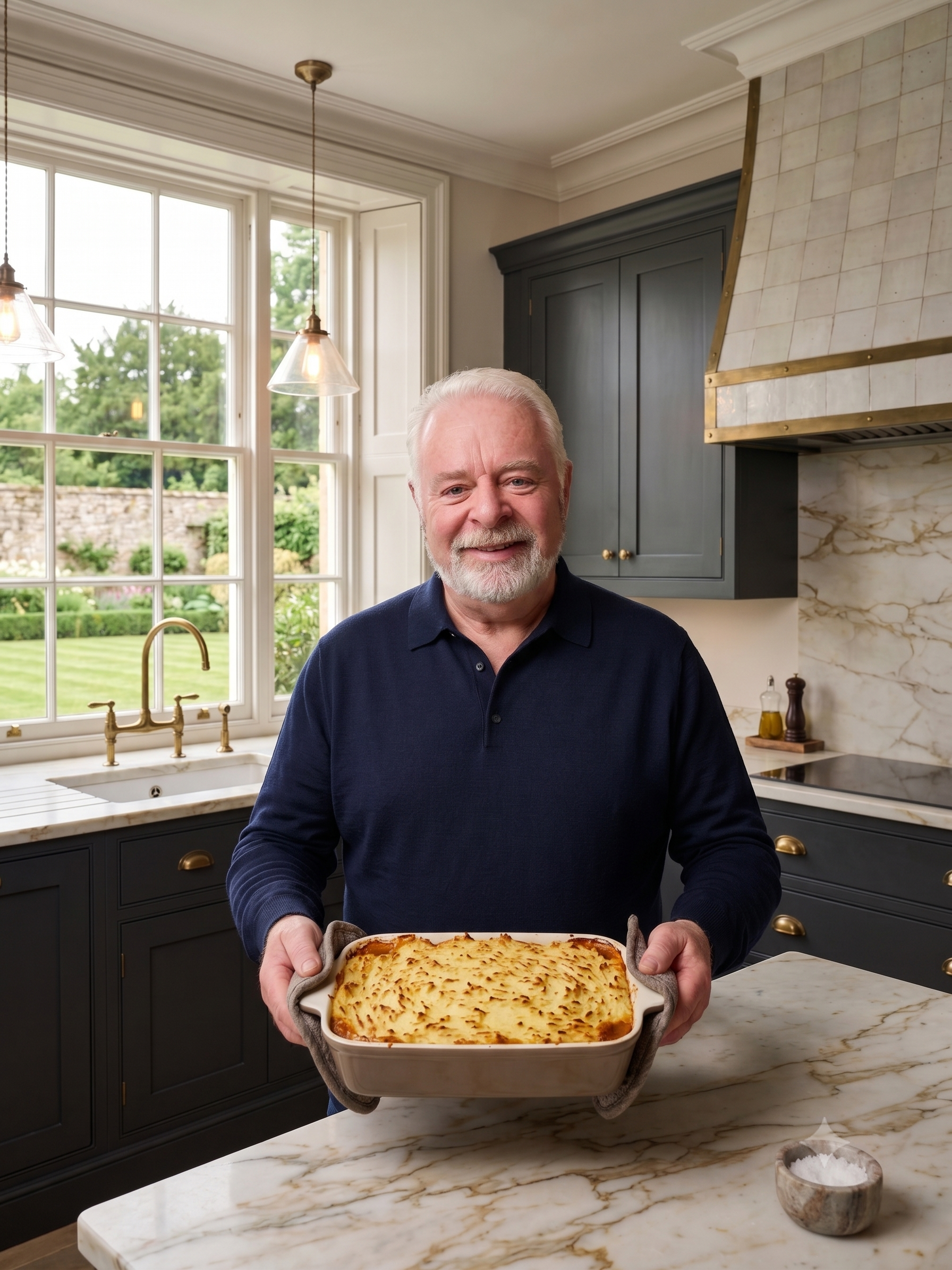
Mark Withey · The Shepherd’s Pie GuyFirstly, a big HELLO and a warm welcome to the true home of Shepherd’s Pie. My name is Mark Withey and I am known as the Shepherd’s Pie Guy. I live near Cobham, Kent in the South East of England and I have been enjoying Shepherd’s Pies since the age of 5. I have created this book, dedicated to my favourite comfort food to share with all of you, my new found friends.
This book isn’t just about all the wonderful recipes within, it’s also about sharing meals with your family and friends, taking some time out together with good old-fashioned comfort food. My recipes are not just about eating healthy nutritious comfort food, but also about the time we spend together eating, drinking, laughing with those we love.
When I first began to research the humble Shepherd’s pie, I soon found out it was anything but and that the variations of this dish expanded around the British Isles and indeed, the globe, with both historic and Royal connections to boot.
So, what is a Shepherd’s Pie? The modern version is a dish of braised minced meat, onions and vegetables, topped with mash potatoes and finished with melted cheddar, which is the most popular version. However, as you will learn from my book, there are many, many different recipes.
It seems that in many places ‘Shepherd’s Pie’ has become the generic term to describe dishes with a potato topping and meat filling (or even Veggie’s). However, in truth, to be a proper Shepherd’s Pie it must be made with Lamb or Mutton. The Beef version is known as a ‘Cottage Pie’ and historic records show that it actually pre-dates its ‘Lamb’ twin, with the earliest examples of this type of dish originally being filled with beef and recipes dating back to the mid 1700’s.
With my book, I’ll take you on a great Shepherd’s Pie journey, from the first Shepherd’s Pie and Cottage Pie recipes recorded, showing how historical recipes actually help change our world for the better and even how the British Royal family influenced one of our Nations favourite foods, which they still enjoy with us today.
Most of the 44 Shepherd’s Pie recipes in my book are my own creation. With each one, I have taken favourite local ingredients and traditions then combined these to create a Shepherd’s Pie recipe that’s honours each region. The recipes retain the principle of a good Shepherd’s Pie, but are re-created into new versions to give you something a little different each time. In addition to my own recipes. I have also included Historical version found in the deepest food archives.
Remember, this book is about creating the best comfort food to share with your family and friends, taking time out from our digital world. Turn off the bloomin’ mobile phones, TV’s and tablets… and talk to each other, please.
Dis-connect to re-connect.
Have a great day
Mark
The Shepherd’s Pie Guy
Humble roots
Bromley, Kent · 1961
About me
Mark Withey · The Shepherd’s Pie GuyI was born in 1961 in Bromley, Kent, England, to a family that came from very humble roots. My Mother Eileen, also known as ‘Sue’ to her friends and family, was a Secretary and in her younger years, a part time chorus girl (she loved to dance). My Father held a full-time job as a shipping clerk, as well as a morning milk round and evening bar job. At weekends he also worked as a runner for the bookies at the local dog track in Catford. They worked incredibly hard and were determined to make a good life for themselves and an even better life for my three brothers and I. Words cannot ever express how grateful I am for the family life I was lucky enough to experience.
Grandad on Dad’s side was a ‘Rag & Bone’ man and I have fond memories of him and his horse and cart, working the local streets and collecting scrap and unwanted items, magically turning them into money. My Nan supported him by bringing up their seven children, all originally living in a tiny house in Downham, Bromley, with no bathroom and just an outside toilet.
On my Mum’s side of the family, Grandad worked in Saville Row as a tailor, specialising in making hand-made shirts, whilst Nan tended the house and looked after my Mum and her sister Pat.
It was during my early and formative years that my memories start of the wonderful Shepherd’s Pie. It seemed at the time that if anyone could cook a proper Shepherds Pie, it was either of our Nan’s or my Mum. There was something about that generation of people that they just excelled in producing tasty homely foods that always left you wanting for more. Often cooked and served in stove-enamelled dishes, together with a selection of the available veg of the day, we couldn’t have been any luckier in life.
The tradition and skill of cooking Shepherd’s Pie was something my Mum continued to do all of her life, until she became too ill to cook. She very sadly passing away from Breast Cancer in April 1993. She was and still is to this day, the inspiration for my cooking and the many family meals we enjoy together and will forever remain in my heart.
From the age of 5, I was also lucky enough to have been at a school that cooked ‘Proper’ school dinners, including my beloved Shepherd’s and Cottage Pie. Served by lovely smiling school cooks and dinner ladies, they lavished us with all the traditional English foods we had come to know and appreciate. My best friend at the time and I would always make sure we were the last ones that went in for lunch, meaning we could go up for seconds of our favourite foods and sometimes even thirds, or fourths! It was a time when my appetite was on the increase and I yet remained stick thin no matter how much I ate (could really do with that now!).
From the age of about 15 or 16, I began and learn to cook for myself. Purely from observing my Mum and following my instinct, I started to create my own food, albeit on a less competent level than Mum and our Nan’s. After leaving home at the age of 20 and renting a room locally, I quickly learned to experiment with food and fend for myself. Since then and after many years spent in the kitchen (literally 16,000 hours or more), I became a reasonably competent cook and as such, regularly produced a good Shepherd’s Pie, as confirmed by family and friends alike. My natural curiosity and need to experiment with flavours, started a journey to find alternative recipes for this dish, but still keep the concept of the Shepherd’s Pie very much alive.
My first recipe book includes many versions of the Shepherd’s Pie and Cottage Pie from around the British Isles, with the second recipe book already in production that include recipes from all around the world.
Long Live
Shepherd’s Pie.
Acknowledgements
Thank you everyoneI would like to say a big thank you to my family and friends who have supported me in making this book, of our great times around the dinner table, putting up with the endless taste testing of the various recipes, and for listening to me wittering on about the wonders of all things Shepherd’s Pie, proving that I really have become the world’s biggest Shepherd’s Pie Nerd, that I thought I would never become.
I would like to say a special thank you to my beautiful wife Denise, for supporting me from the first moment I envisioned the idea of this book. She has been with me on this journey from the start, through the trials and tribulations of collating the information and helping me through the hundreds of hours spent researching recipes into the wee small hours.
By far my biggest debt of gratitude is to all those that have gone before me and sadly, no longer here.
Equally, and by no means least, I would like to thank all the professionals that have guided me through the creation of my first eBook, my website and in creating what appears to have become a bit of an amazing phenomenon!
To my Mum and Dad, my Grandparents, my Aunts, Uncles and Dear Friends who have spent many hours sharing meals, sharing stories, as well as honing their own cooking skills, tweaking family recipes in order to find the perfect formula, the perfect dish…
…the perfect Shepherd’s Pie.
Thank you everyone.
Origin and History of The Shepherd’s Pie
1520 – 1870Although Potatoes were introduced to the British Isles around 1520, they weren’t readily accepted and used in everyday cooking until much later. The original Shepherd's Pie or Cottage Pie is thought to have originated around 1750 possibly earlier, from somewhere in the north of England. Early recipes and records of the Shepherd’s Pie can also be traced back to Southern Ireland, Wales and Scotland, although the Scottish are thought to have originally topped their version with Pastry (so not a proper Shepherd’s Pie then, I can hear you all say, just a meat pie!).
Originally, The Shepherd’s or Cottage Pie would have been made from leftover meat from a meal such as a Sunday roast, including the tiny pieces trimmed directly from the bone. Back in the day, people would place a joint of meat in the oven to cook for Sunday lunch, while they attended Church. This paved the way to a traditional Sunday roast and likewise the Shepherd’s Pie or Cottage Pie that followed.
A Shepherd’s Pie was named as such because it contained Lamb or Mutton. The Cottage Pie that got its name in the late 18th century because it was a humble inexpensive dish made predominantly by poorer rural workers who lived in small cottages.
Since mincing machines weren't invented until the 1870’s, originally the meat would have been cut from the bone and chopped with a knife. Any locally available vegetables were then added to bulk out what essentially at the time was a poor-man’s dish. As there was no refrigeration in this time period, sometimes the meat could also have been smoked, dried or salted to preserve it and in each case, this would have added another dimension to the final flavor which not experienced in the modern version today.
During the 1800’s in the north of England, cattle farming was more prevalent and as such beef more easily available, whist the southern counties relied more on pork and wild game. Home refrigerators didn’t really come into use until around 1914 and even then, it was the wealthy and upper classes that benefitted from this kitchen appliance first, so the general consensus of opinion is that in most cases, the Shepherd’s Pie or Cottage Pie were made from the previous day scraps and the meat type varied from area to area, depending on what was available.
With Potato farming in Ireland covering more than a third of arable farming by the mid 18th century, this plentiful and cheap vegetable became the topping of choice for the Shepherd’s pie and the firm family favourite that we know and love today.
Since its conception, the Shepherd’s Pie has seen many variations of the recipe, both official and those handed down from family to family. Whilst the basic ingredients tend to remain fairly consistent throughout the variations, people’s personal preferences vary immensely and with a huge variety of available local ingredients, this has produced many recipes, all equally as wonderful as the next.
Origin and History
Names, variations & the mincing machineThe term “Shepherd´s Pie” did not really appear in recipe books until around 1877, and since then it has been used synonymously with the name “Cottage pie.
The name “Cottage Pie” was applied to this kind of meat pie around 1790, so predates the modern Shepherd’s Pie by nearly a century. The name ‘Cottage Pie’ was it was predominantly made by poorer workers, living rural cottages.
Another variation of this dish is the ‘Cumberland Pie’. In modern terms, simply topping the potatoes with a layer of breadcrumbs actually turns your dish into a “Cumberland pie”, otherwise it’s the basically same ingredients as a Cottage Pie, with a beef filling. However, in the early recipes the topping was often pastry rather than potato, and the filling was a combination of meat with fruits and spices.
Although variations of this dish show up throughout history from about 1800’s onwards, no real name for it came into use until the introduction of the mincing machine.
The first meat grinder was invented in around 1845 by the German revolutionist, Karl Friedrich Christian Ludwig Freiherr Drais von Sauerbronn, (also known as Karl Drais). He was born in Germany in 1785; he was a revolutionist and heavily involved in politics.
The first meat grinder was hand cranked and forced meat through a metal plate which had several small holes, resulting in long thin strands of meat. As time passed, the hand cranked machines became powered by electricity and giving you the modern ‘mincing machines’ that we know and use today.
A short chronology
From Historical Recipes to Modern Masterpieces
Forty plus recipesMy guess is that the majority of the people reading this book have never tasted an original Shepherd’s Pie (I can now hear screams of yes, we have, Of course, we have! We make the best Shepherd’s Pie ever!!).
Well, my friends, until you read this book and looked at the recipes herein, you will soon realise that you have probably have only ever cooked a modern version of a Shepherd’s Pie, made of either minced Lamb, minced Beef (yes, again, I know that’s a cottage pie!) or possibly a veggie version. But almost certainly, you won’t have seen any historical recipes before, let alone tasted them.
Now, whilst the modern Shepherd’s Pie is a wonderful thing, as can be confirmed by many people around the world, over the course of this book I hope to show you all (even the most experienced of cooks and chef’s), as to the wonder that is the Shepherd’s Pie in all its versions and glory.
In this book, there are some 40 plus different recipes of Shepherd’s Pie from around the British Isles. This includes original and historical recipes from as early as the 1800’s, versions from existing recipe books and (start the fanfare!), many of my own creations that pay homage to the huge variety of wonderful local ingredients around the British Isles that are available to many of us today.
The Royal Table
Royal connectionsHRH Queen Elizabeth II Ate Shepherd’s Pie!
It has been reported that despite being one of the richest women in the world, the Queen of England was renowned for her frugality and insisted that leftovers from meals should be eaten the next day. So, on a Monday, with left over Sunday roast meats, she may have eaten similar meals to her servants such as Shepherd’s Pie, Cottage Pie, Rissoles and even bubble and squeak.
Back in May 2006, during a whistle-stop tour of Lancashire, Queen Elizabeth II, together with Prince Phillip, was reported to have had her first ever Pub lunch at ‘The Inn’ at Whitewell, a 14th-century pub set in three acres of grounds, which is the village local. Here the Royal couple sat down to a meal of cottage pie, apple crumble and Lancashire cheese along with 50 VIP’s.
Then in March 2012, Queen Elizabeth II and Prince Phillip paid a visit the Krishna Avanti School in Harrow during the Queens regional Jubilee tour, where they both enjoyed a two-course lunch of Indian Shepherd's pie followed by clotted cream bread and butter pudding prepared by celebrity chef Cyrus Todiwala.
HRH King Charles III Shepherd’s Pie.
King Charles’s preferred recipe—often referred to as his favorite "country pie" or "shepherd’s pie"—uses minced lamb, simmered with mushrooms, carrots and a savoury herb gravy, then topped with golden, buttery mashed potatoes.
This hearty, game-rich adaptation reflects the King's well-known love for seasonal British produce and locally sourced meats.
For more royal culinary history, it's widely documented that the King prefers game pies and wild-caught game like pheasant over traditional lamb, though classic Shepherd's and Cottage pies frequently feature on royal family menus.
So, it appears that the most famous Royal family in the world also love this family comfort food, making Shepherd’s Pie as British as Bowler hats, Red Buses and Buckingham Palace.
Long live the Shepherd’s Pie!
About the recipes in this book
Six standard portionsAll of the recipes in this book are measured to provide Six standard portions (or
four large portions) with a suggested total ingredient weight of around 750g. Obviously, you will need to
increase or decrease the percentage of ingredients accordingly for smaller or larger meals. In our eBooks
you can use the built in calculator to adjust quantities.
Whenever possible, I always suggest that you source both organic meats and vegetables. I like to buy from
my local butcher as much as possible and I would encourage that you try to do the same. Apart from the fact
that it’s good to support community businesses, your local butcher may have access to the less readily
available meats that you may not find in many supermarkets. I also shop at our local farm shop for freshly
grown vegetables. They don’t come pre-packed and all nicely washed like the supermarkets do, but they are
farm fresh and mostly organic.
I talk about using both fresh and dried herbs in my recipes and although generally I do believe that fresh
is best, I realise that the dried versions are what many modern households would use today. In many of my
recipes, the dried herbs work just as well. Also, items like “Ground Bay leaves’ and Seaweed are not readily
available in the supermarkets, but they will be available through my website shop!
As a general guide to making Shepherd’s Pie, the recipes should only act as a guide. In some cases, there may be ingredients that you’re not keen on, or maybe even have an allergy to (all my recipes are gluten free, unless otherwise stated).
Please feel free to adjust the recipes to suit the tastes of your family, guests and yourself and may be even mix and match ideas from different recipes in the book to create your own recipe.
If you come up with a new recipe that isn’t in my book, maybe you can email it thought to me and we can try to recreate it here at Shepherd’s Pie HQ!
Ingredients Overview
Organic, local, seasonalFrom a health perspective I try to use all Organic ingredients whenever possible and would recommend that you try to do the same. I tend to shop as locally at the local butchers or local farm shop, this also helps to minimize my carbon footprint.
Ingredients
I have been asked on many occasions, which is the best Shepherd’s Pie recipe I would recommend. I have equally been told on many occasions that the person I am speaking to at the time, actually cook’s the best Shepherd’s Pie.
Personally, I don’t think you can really say which is the best as we all have such different tastes in food. Whilst I agree that the original Lamb version is probably the most recognized and most loved recipe amongst those here in the UK, having tried and invented a myriad of UK versions, I have to admit that there is no clear winner, it’s just down to your personal choice. Once you have tried some of the other versions in this book, I am sure you will find that variety really is the spice of life and that this dish has now reached a level that few recipes ever get to achieve. It’s not until you have tried a few of the different recipes from this book, that you will see exactly what I mean and the numerous ingredients that make up each version, really do put a complete new twist on the flavour of this much-loved dish.
The Meat or Veggie filling
As I mentioned earlier, the original Shepherd’s Pie would have been made with left over meats from a previously cooked dish, such as a Sunday Roast.
All this delicious roasted meat would have been trimmed from the bone, finely chopped and then simmered in
a good stock base, creating the heavenly and unctuous meat filling. Adding diced vegetables to bulk out this
pauper’s dish, enhances the flavor and helps it go further to feed the family.
Whilst most modern versions of the Shepherd’s Pie normally use minced meat for a convenience point of view, sticking with the tradition of using hand chopped and shredded roasted meats, gives another dimension to the final flavor. In fact, I would urge you to buy a much larger roasting joint for your next Sunday lunch, with the specific intention of using the left-over meat as above. Slow roasting and even better, braising, the meat before-hand gives a completely different dimension than when using a minced version of the same meat. Until you have tried an original version of the Shepherd’s Pie, you just haven’t lived!
The Meat or Veggie filling
ContinuedIf you don’t have any leftovers available and your only option is to buy some ready minced meat, I would definitely look at buying from your local butcher and asking for low fat, organic meat wherever possible. I have found that many of the cheaper minced meat products available in the supermarkets tend to have a higher fat content and as such, you will end up draining most of this away, wasting money.
I am sure that in the past the concept of adding mashed potatoes over the top of left over meats wasn’t
limited to just Lamb or Beef and as you explore my book, a number of the recipes make good use of the myriad
of quality meats.
My suggestion would be in all cases, whatever meat you use, when ever possible buy fresh organic meats and
again, support your local butcher. He will also be able to mince the more unusual meats for you, those not
found at your local supermarket in minced form, such as the varieties of game. (If you’re not intending to
roast or braise beforehand).
The origin of Shepherds Pie’s origin was mainly a Paupers dish and if organic meat isn’t available (it’s ironic that all meats in the 18th Century would probably have been considered Organic!), cheaper cuts of meat as well as left-overs still all work very well.
The Mash Topping
Those of you lucky enough to be brought up with Shepherds’ Pie,
will of course love the wonderful cheese
topped, light and creamy mashed potatoes that adorned the tasty meat filling, all lovingly prepared by our
Mum & Dad’s, Nan & Grandad’s across the country. As many Chef’s will also tell you, the secret of
good mash starts with using the right potatoes.
I have tried a number of varieties over
the years, but always return to my UK favourite the ‘Maris Piper’. In the USA the favourite option tends to
be the ‘Yukon Gold’ and I am sure that where-ever you are in the world, you will know what local spuds are
best for you. Both potatoes are a good ‘all-rounders’, with excellent flavour and perfect for mashing.
Often, the choice of potato is down to what is locally available, but a good rule of thumb is to choose a
variety that is slightly floury and not to overcook them as nobody likes watery mash!
The Mash Topping
ContinuedIn terms of how you mash the potatoes is another debatable issue. I like to hand mash the potatoes, which gives me control over how creamy the finished mash is. Or, if I fancy a rustic style ‘Crushed’ Potato topping, I can do so by less mashing and more smashing! Some people like to use a Potato Ricer which produces a very fine smooth creamy mash, at the same time as taking out some of the effort. At the end of the day, it’s just a personal preference.
One thing when making your mash, is to make sure you cut all the potatoes into similar sized cubes and then
boil for around 15 to 20 minutes. If the pieces are of all similar size (I aim for around 2.5cm/1 inch
cubes) they will all cook through equally, this avoids any nasty hard pieces of potato finding their way
into your dish. Don’t overcook your potatoes as they start to disintegrate and turn into Potato
soup.
In terms of what you add to your mash, is again a personal choice. Depending on your own palate and diet,
the amount of butter, milk, cream, salt and pepper will vary and what is perfect mash to you, may not be the
same to someone else. Vegetarians and Vegans often substitute the dairy element with a little Olive oil,
which works well, especially if you used oils that are infused with herbs or garlic.
Another favourite, particularly with Chefs, is to add Egg Yolks to the recipe. This gives a lovely richness to the taste. Some of the recipes in my book, also include other vegetables incorporated into the mash, such as Sweet Potatoes, Parsnips, Pumpkin, Cauliflower and other vegetables. Remember that these vegetables also have there own cooking time. For instance,
sweet potatoes cook more quickly than white potatoes. It’s important
to time your mash so when you add your other vegetables to the boiling water, they all cook to perfection at
the same time.
At the end of the day, it’s good to just prepare the mash the way you like it and if you need guidance,
just use any of the recipes below.
In my opinion, the final touch to a good Shepherd’s Pie is a coating of cheese on top of the mash. It’s my personal preference is to use a vintage cheddar with lots of bite, but this isn’t to everyone’s taste. With the different recipes, I have suggested various types of cheese, each suited to the ingredients there in. However, my rule of thumb is when in doubt, just use a nice strong cheddar.
Mark’s Favourite Shepherd’s Pie
Recipe No. 1 PHOTO Mark & Denise
Historical Recipes
1588 – 17741588 The Origin of the Potato in the British Isles
Potatoes were introduce in to Europe sometime before the end of the 16th century by two different ports of entry. The first in Spain around 1570, and the second via the British Isles between 1588 and 1593. The potato has since spread around the world and has become a staple crop in many countries.
The earliest recipes I can find that resemble a Shepherd’s or even Cottage Pie ask for a bit of artistic licence, but the basic requirements are there, essentially minced meat and potatoes, plus many other ingredients of the period and locality.
1596 For to Make Mutton Pies
Mince your mutton and your white together. When it is minced season it with pepper, cinnamon, ginger, cloves, mace, prunes, currants, dates and raisins, and hard eggs, boiled and chopped very small, and throw them on top."
Source; The Good Housewife's Jewel, Thomas Dawson, 1595 edition With an introduction by Maggie Black [Southover Press:East Sussex] 1996 (p. 68)
1685 To make minced Pies of Mutton
Take to a leg of mutton four pound of beef-suet, bone the leg and cut it raw into small pieces, as also the suet, mince them together very fine, and being minc't season it with two pound of currants, two pound of raisins, two
pound of prunes, an ounce of caraway seed, an ounce of nutmegs, an ounce of pepper, an ounce of cloves, and mace, and six ounces of salt; stir up all together, fill the pies, and bake them as the former."
Source: The Accomplisth Cook, Robert May, facsimile 1685 edition [Prospect Books: Devon] 1994 (p. 232)
1774 “To Make a very fine Sweet lamb or Veal Pye.
Season your Lamb with Salt, Pepper, Cloves, Mace and Nutmeg, all beat fine, to your Palate. Cut your Lamb, or Veal, into little Pieces, make a good Puff-paste Crust, lay it into your Dish, then lay in your Meat, strew on it some stoned Raisins and Currans clean washed, and some Sugar; then lay on it some Forced-meat Balls made sweet, and in the Summer some Artichoke-bottoms boiled, and scalded Grapes in the Winter. Boil Spanish Potatoes cut in Pieces, candied Citron, candied Orange, and Lemon-peel, and three or four large Blades of Mace; put Butter on the Top, close up your Pye, and bake it. Have ready against it comes out of the Oven a Caudle [thick drink] made thus: Take a Pint of White Wine, and mix in the Yolks of three Eggs, stir it well together over the Fire, one way, all the time till it is thick; then take it off, stir in Sugar enough to sweeten it, and squeeze in the Juice of a Lemon; pour it hot into your Pye, and close it up again. Send it hot to table."
Source: The Art of Cookery Made Plain & Easy, Hannah Glasse [London:1747] Chapter VIII, "Of Pies."
Historical Recipes
1791 – 18861791 Cottage Pye
There are earlier references to ‘Cottage Pie’ than to ‘Shepherd’s Pie’. For example the diarist Reverend James Woodford recorded that he had eaten Cottage Pye for dinner in 1791, noting in his diary ‘Dinner today, Cottage-Pye and rost Beef' (although it is not clear precisely what this contained).
1806 Maria Rundell's "Sanders"
One of the earliest published precursors to Shepherd's Pie appeared in Maria Rundell's highly influential 1806 book, A New System of Domestic Cookery.
Ingredients
- Cold leftover meat (beef or mutton), minced small
- Onion, finely chopped
- Salt, pepper, and gravy
- Mashed potatoes (moistened with cream)
- A small bit of butter
Instructions
- Mince the cold meat and onions, then season with salt, pepper, and gravy.
- Fill scallop shells or small saucers about three-quarters full with the meat mixture.
- Top and fill the remaining space with thick, creamed mashed potatoes.
- Dot the top with butter and bake or brown in a hot oven until a golden crust forms.
1849 A Casserole of Mutton
Butter a deep dish or mould, and line it with potatoes mashed with milk or butter and seasoned with pepper and salt.
Fill it with slices of the lean cold mutton, or lamb, seasoned also. Cover the whole with more mashed potatoes. Put it into an oven, and bake it till the meat is thoroughly warmed, and the potatoes brown. Then carefully turn it out on a large dish; or you may, if more convenient, send it to table in the dish it was baked in."
Source; Directions for Cookery in Its Various Branches, Miss Leslie [Philadelphia:1849] (p. 111)
1886 Shepherd’s Pie — Mrs. Rorer's Philadelphia Cook Book
- 1 pound of cold mutton
- 1 pint of cold boiled potatoes
- 1 tablespoon of butter
- 1/2 cup of stock or water
- Salt and pepper to taste
- 4 good-sized potatoes
- 1/4 cup cream
Cut the mutton and boiled potatoes into pieces about one inch square; put them in a deep pie or baking dish, add the stock or water, salt, pepper, and half the butter cut into small bits. The make the crust as follows: Pare and boil the potatoes, then mash them, add the cream, the remainder of the butter, salt and pepper, beat until light. Now add flour enough to make a soft dough--about one cupful. Roll it out into a sheet, make a hole in the centre of the crust, to allow the escape of steam. Bake in a moderate oven one hour, serve in the same dish."
1886 – Shepherd’s Pie - Mrs. Rorer's Philadelphia Cook Book, Mrs. Sarah Tyson Rorer (Philadephia: 1886 - p. 117)
Historical Recipes
1894 · Cassell’s New Universal Cookery Book1894 Cottage Pie
Required: a pound and a half of cooked potatoes, half a pound to three-quarters of cold meat, seasoning and
gravy as below. Cost, about 9d. The potatoes must be nicely cooked and mashed while hot. This should be
seasoned and beaten until light with a wooden spoon. A pie dish should then be greased, and the potatoes put
at the bottom, to form a layer from half to an inch in thickness. The meat should be made into a thick mince
of the usual kind with stock or gravy...or it may be mixed with Onion Sauce, or any other which may be sent
to table with meat. The nicer the mince, the nicer of course, will be the pie. The meat goes next and should
be put in the centre of the bottom layer, leaving a little space all around.
Then drop the
remainder of the potatoes on the top, beginning at the sides--this prevents the boiling out of the gravy
when the meat begins to cook--go on until all the used, making the pie highest in the middle. Take a fork,
and rough the surface all over, because it will brown better than if left smooth. For a plain dish, bake it
for fifteen to twenty minutes.
Or it may be just sprinkled with melted dripping (a brush is used
for this), or it may be coated with beaten egg, part of which may then be used in the mashed potatoes. As
soon as the pie is hot through and brown, it should be served. There are many recipes for this pie, or
variation of it, and in some, directions are given for putting the meat in the dish first, and all the
potatoes on the top. The plan above detailed will be found the better, because the meat being enveloped entirely in potatoes runs no risk of becoming hard,
as it would do it exposed to the direct heat of the oven.
Any other cooked vegetables may be added to the above, but they should be placed between the meat and
potatoes, both top and bottom. If a very savoury pie is desired, make the mince very moist, and allow longer
time for baking.
The potatoes will absorb some of the gravy, and found tasty. In this case, the
heat must not be fierce at starting, only at the end for the pie to brown well. For a richer pie, allow a
larger proportion of meat. For a very cheap one, half a pound of meat will do for two pounds of potatoes."
Source; Cassell's New Universal Cookery Book, Lizzie Heritage [Cassell and Company:London] 1894 (p. 512-3)
Historical Recipes
1894 · Cassell’s New Universal Cookery Book1894 Tinned Meat, Shepherd's Pie
Required: two pounds of meat, half-a-pint of canned tomatoes, half-a-pound of fried onions, salt and black pepper, and any herbs preferred, four pounds of potatoes, and some gravy. Cost, 1s. 6d. To 1s. 8d. First grease a deep baking dish with some of the melted fat from the tin. Boil or steam the potatoes, mash and season them ...and put them in an inch thick at the bottom and sides of the dish. Then put the onions all over the potato layer. Mince the meat, add the jelly from it, and the tomatoes, with a little more stock or plain gravy of any sort; pile this in the centre of the dish; put the remainder of the potatoes thickly on the top; rough the surface with a fork, and bake until well browned in a moderate oven about three-quarters of an hour. The potatoes will absorb some of the gravy and be very savoury. The dish is an excellent one, considering its small cost. If liked, some pork can be added, and apple sauce used instead of the tomatoes. Tinned ox-tails, ox cheek, kidney, & c., may take the place of the beef or mutton. Either will provide a hot, cheap meal in a short time."
Source; ibid (p. 533)
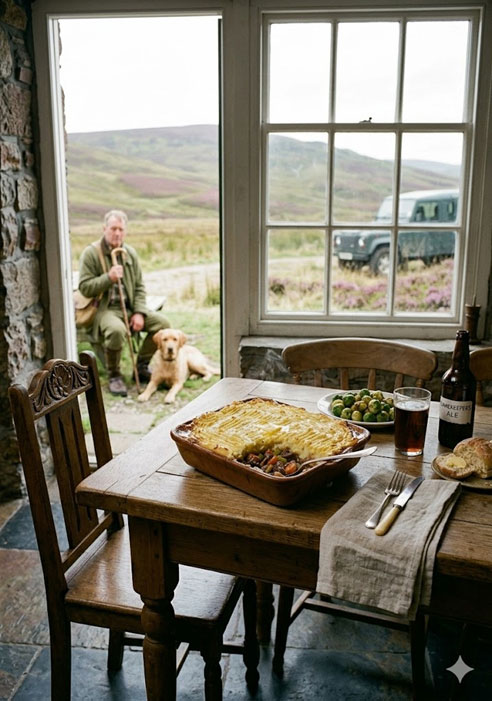
“The dish is an excellent one, considering its small cost.”
Cassell’s New Universal Cookery Book, 1894
1941 · The Savoy Hotel, London
1941 Woolton Pie — The Vegetarian Pie that helped to win World War II
It has been said that in Britain’s darkest hour there was one man who came up with a weapon of mass nutrition that was to defeat the Nazi’s and from which delivered a lesson for modern society in the global war against obesity.
In the Autumn of 1941 our island nation stood alone. Hitler had all but conquered Europe and the United States was yet to join the war. The Nazi strategy was a very simple one, to bring the Brits to their knees by starving them. With many of the supply ships being sunk in the Atlantic by the German U-boats, an estimated 500 thousand tons of food, much of it essential meats and wheat, was lost each month that went by, halving the amount of supplies reaching Britain. These difficult and dark times called for new thinking if Britain was to survive and defeat the Nazi’s. In 1940, Winston Churchill had appointed Lord Woolton as Wartime minister of food. ‘Uncle Fred’ as his colleagues and the nation came to know him, was previously managing director of a successful retail chain.
Under Churchill’s instruction and in a bid to find an answer to the nations food problems, Lord Woolton asked the ‘Chef de Cuisine’, Francis Latry, at London’s Savoy Hotel, to come up with a new and healthy recipe that would help feed the nation.
The resultant dish was known as ‘Woolton Pie’. A simple recipe styled on the Shepherd’s Pie, but with garden vegetable’s substituting the meat filling. This dish was a symbol of hope and was to literally re-shape the nation. According to the British Nutrition Foundation, at the end of the war the surviving population was physically healthier than it had been before the war.
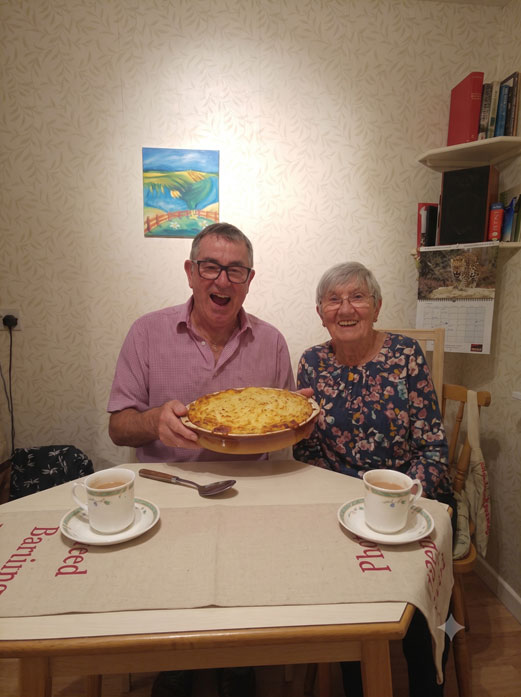
Plate
Lord Woolton
Wartime Minister of Food, 1940
1941 Woolton Pie Recipe – Francis Latry
Savoy Restaurant kitchen copyThe recipe involved dicing and cooking various veg, potatoes (or parsnips), cauliflower, swede, carrots and possibly turnip. Rolled oats and chopped spring onions were added to the thickened vegetable water, which in turn was poured over the vegetables themselves. The dish was topped with a potato pastry and grated cheese and served with vegetable gravy. The recipe could be adapted to reflect the availability and seasonality of ingredients and quite often in the absence of available flour, a simple mash potato topping sufficed, giving resemblance to the Shepherd’s Pie. This recipe is based on the original Savoy Restaurant kitchen copy.
For the filling
- 1 lb potatoes – Ideally King Edward
- 2 lbs carrots
- ½ lb mushrooms
- 1 small leek
- 2oz margarine
- 2 spring onions
- Salt, pepper, nutmeg, chopped parsley
- Bunch of herbs made of 1 small bay leaf, 1 small sprig of thyme, parsley and celery
For the ‘Potato Pastry’ topping
- 6oz (165g) Potatoes
- 2oz (55g) plain wheatmeal flour
- 1/2 teaspoon salt
- 1 teaspoon baking powder
- 2oz (50g) Butter or margarine
Method — the filling
Peel the potatoes and carrots, cut them into slices of the thickness of a penny.
Wash them well and dry in a tea-cloth. Fry them separately in a frying pan with a little chicken fat (or vegetable or butter if making for vegetarians). Do the same for the mushrooms, adding the finely chopped onions and leek.
Mix them together and season with salt, pepper and a little nutmeg and roughly chopped fresh parsley.
Fill a pie-dish with this mixture, placing the bundle of herbs in the middle. Moisten with a little water. Allow to cool.
Cover with a Potato pastry crust and bake in (a moderate) oven for 1½ hours, or until potato topping is sufficiently browned.
Method — the topping
Cook the potatoes in a saucepan of boiling water for 8–10 minutes or until just tender.
Drain well, then mash with the milk. Set aside to cool.
Sift the flour and salt into a large mixing bowl. Add the butter or margarine and rub in until the mixture resembles fine breadcrumbs.
Add the mashed potatoes to the rubbed-in mixture and mix together to form soft dough. Cover and chill for at least 30 minutes before rolling out. Roll out and use as in the individual recipe.
How to make a Classic Shepherd’s or Cottage Pie
Method OverviewAlthough the ingredients vary from dish to dish, the recipes throughout this book are very similar to cook, so to keep this simple, the cooking methods are outlined below for a classic Shepherd’s Pie. Using this format, you will be able to create any of my recipes, using the ingredients listed for each one.
My Website will also help you with cooking each recipe, the timings and even a COOK MODE to help create a perfect dish.
Once you have mastered one of the dishes, the rest will fall into place.
Method for The Filling
Preheat oven to 350°F/180°C (Fan) 20 mins into the cooking time.
So, firstly, please wash your hands and then rinse your vegetables.
Finely dice the Onions, Leeks or Shallots. Add the Olive oil to a large deep pan over medium heat and then add the Onions, Leeks or Shallots, slowly cook for around 10 mins till translucent, continually stirring to avoid burning.
If using Onions, you can also choose to grate your onion and vegetables in with the meat, so that they melt into the overall mixture. If using this method, then sauté your meat first.
Diced any vegetables in the recipe, keeping them small for an even cook. If using baby Chantenay carrots, top and tail and par boil these for 5 mins to soften them slightly, before adding to the meat mixture.
Add the meat into the pan and sauté for about 20 mins until cooked through. Constantly stirring, make sure the mince is broken down into the smallest pieces, so you aren’t left with any balls of mince. Keep turning so the meat so the onions don’t burn. Season with half of the salt and pepper.
Stir in the carrots and other raw vegetables, add the garlic and herbs, cook for another few minutes.
Add the tomato paste, Worcestershire sauce, mushroom ketchup of Hendersons relish, mix well.
Sprinkle the flour and mix in well, cook for 1 minute.
Add the meat stock and bring to a simmer. Cook for 5 minutes until some of the liquid has reduced.
Stir in the beef and turn off the heat.
Transfer the beef to your preferred dish and top with the mashed potato, grated cheese and breadcrumbs. Bake for 30 minutes until the top is golden.
Method for the Mash — How to make a great Mash Topping
Method OverviewAs you will see there are many variations for the mash and this method isn’t exclusive to just a mash potato topping.
A standard Potato mash, includes butter, a little milk, Egg yolks, a pinch of Nutmeg, salt and pepper to season.
Many of my recipes have additional ingredients for the mash, to give the recipe it’s unique twist. Flavoured mash toppings include ingredients such as Onions, Leeks, spring onions, shallots and other vegetables, herbs and flavourings.
To a large pan add the potatoes, add cold water until the potatoes are covered and bring to a boil. Turn down to a low boil and cook for 20 minutes until tender.
Drain the potatoes in a colander and add back to the pan. Mash until smooth and add the butter, milk, salt and pepper to taste. Mix well and set aside.
England · Recipe No. 1
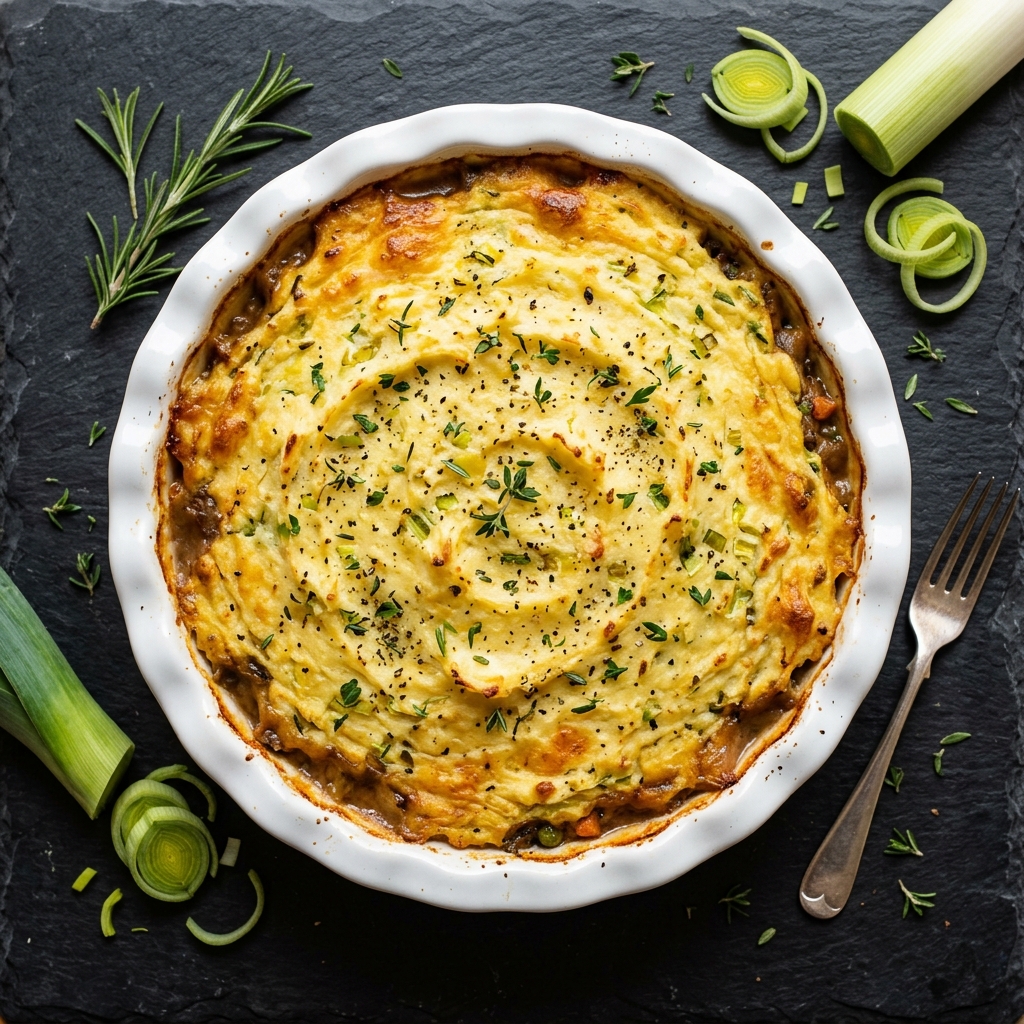
Mark’s Favourite Shepherd’s Pie
England Maris Piper Mash
Davidstow Vintage Cheddar
I am often asked which Shepherd’s Pie or Cottage Pie recipe in my book is the best. As I have said before, with so many great recipes, it is almost impossible to choose just one. So, for this section, I am sharing my favourite go-to recipe, the one that, for me, ticks every box. Sharing this Shepherd’s Pie with your family and friends, it always brings smiles to the dinner table.
https://www.davidstowcheddar.co.uk/en/products/cheddars/reserve
Drink of choice
For my favourite Shepherd’s Pie drink of choice, it has to be Innis & Gunn Ale. I know I have mentioned this in another recipe in the book, but for me this really is the perfect Ale.
Innis & Gunn has utilized sherry barrels for special limited editions and cask-finish variants (such as Pedro Ximénez and Oloroso cask finishes). While their flagship beer ("The Original") relies primarily on single-malt bourbon oak barrels, their sherry cask expressions introduce rich notes of dried fruit, dark chocolate, and spice. These ales really are the crème de la crème of ales.
https://candcgroupplc.com/products/innis-and-gunn/
For the Filling
- 1 tbsp of Olive Oil
- 750g Best minced Lamb
- 1/4 teaspoon Ground Black Pepper
- 1 large Leek, finely chopped
- 2 medium Carrots, finely chopped
- 1 tin of Marrowfat Peas
- 3 cloves Garlic, finely chopped
- A sprig of Fresh Thyme and one of Rosemary
- ½ Teaspoon Ground Bay leaves
- 1 tblsp Tomato Puree
- 2 tsp of Smoked Paprika
- 1 tblsp Hendersons Relish
- 1 dessert spoon of Cumberland sauce
- A glass of Pedro Ximénez (PX) sherry
- 300ml Organic Lamb Stock
For the Mash
- 500g Maris Piper Potato, peeled and cut into chunks
- 50g Butter
- 50ml Milk
- 1/4 teaspoon Salt
- A pinch of Ground White Pepper
- A pinch of Nutmeg
- 2 Egg Yolks
- 1/2 cup Grated Davidstow 36 mth Vintage Cheddar
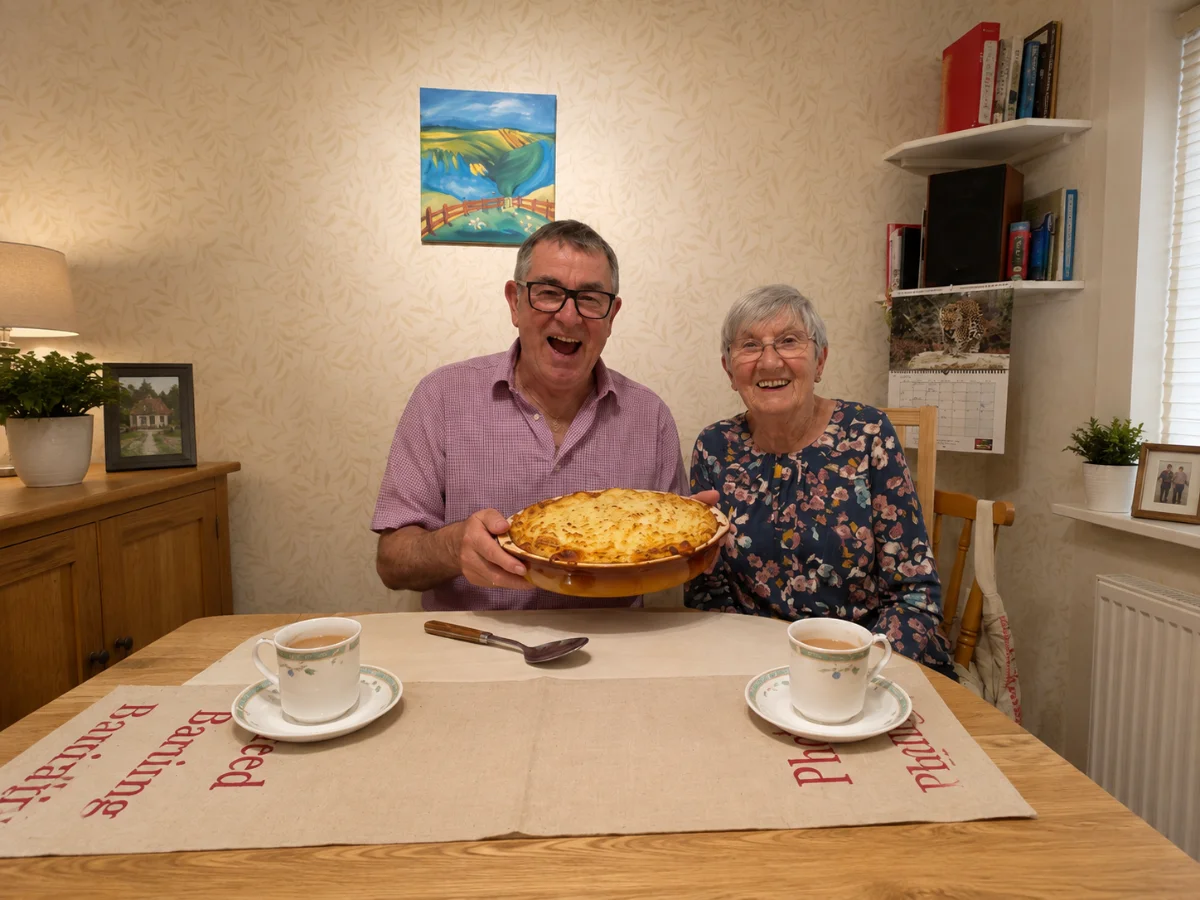
The Classic Shepherd’s Pie
Auntie Jean & Uncle Alan, the Ultimate family foodies!
England · Recipe No. 2
Classic Shepherd’s Pie
England Maris Piper Mash
Mature Cheddar
My Auntie Jean and Uncle Alan were the epitome of the family foodies. They loved to cook and even more so for their 6 boys and in turn their families also. Alan was always at family parties with his camera ready to snap family and friends enjoying mealtimes together. He loved his food and the Classic Shepherd’s Pie was a firm family favourite.
Method
To a large pan add the potatoes, add cold water until the potatoes are covered and bring to a boil. Turn down to a low boil and cook for 20 minutes until tender.
Drain the potatoes in a colander and add back to the pan. Mash until smooth and add the butter, milk, salt and pepper to taste. Mix well and set aside.
Preheat oven to 350°F.
For the filling:
Add vegetable oil to a heavy skillet over medium-high heat and add 1/2 of the beef. If the pan is too crowded, the meat will not brown, it will boil.
Season with half of the salt and pepper, sauté until browned. Remove and set aside, repeat with the other half of the beef.
To the drippings (add more oil if needed) add the onion, cook until softened. Stir in the carrots, garlic and thyme, cook for 1 minute.
Add the tomato paste and Worcestershire sauce, mix well. Sprinkle the flour and mix in well, cook for 1 minute.
Add the beef stock and bring to a simmer. Cook for 5 minutes until some of the liquid has reduced.
Stir in the beef and turn off the heat.
Transfer the beef to your preferred dish and top with the mashed potato, grated cheese and breadcrumbs. Bake for 30 minutes until the top is golden.
For the Filling
- 1 tbsp of Olive Oil
- 750g (26.5oz) Best minced Lamb
- 1/4 teaspoon Ground Black Pepper
- 1 medium Onion, chopped
- 2 medium Carrots, sliced
- 2 cloves Garlic, finely chopped
- 1 1/2 teaspoons Fresh Thyme, finely chopped
- ½ Teaspoon Ground Bay leaves
- 1 tablespoons Tomato Puree
- 2 teaspoons Worcestershire Sauce
- 1 teaspoon GF Flour
- 2 Beef Stock cubes
For the Mash
- 500g (17.5oz) Maris Piper Potato, peeled and cut into chunks
- 50g (2oz) Butter
- 50ml (2oz) Milk
- 1/4 teaspoon Salt
- 1/4 teaspoon Ground Black Pepper
- 1/2 cup Grated Mature Cheddar Cheese
Drink of choice
For the traditional Shepherd’s Pie, the drink of choice for Auntie Jean and Uncle Alan has to be a traditional British Drink and none more so than a good old cup of Rosy Lea (Tea!).
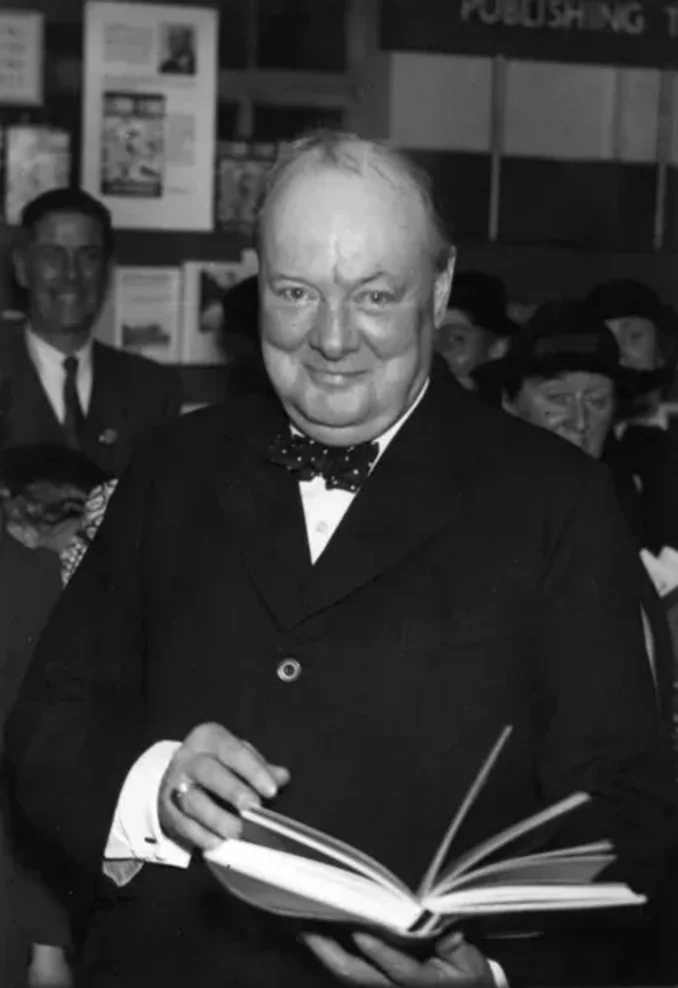
Plate I
Sir Winston Churchill
May be Winston looking for a Shepherd’s Pie recipe!
England · Recipe No. 3
Sir Winston Churchill’s Shepherd’s Pie
A very dear family friend, Nicholas Boy Gilling, whom we affectionately knew as ‘Uncle Nick’, held a position in Her Majesties Government working with Sir Winston Churchill. We often wondered what interactions he would have had with Mr Churchill and if they ever shared a Shepherd’s Pie together at ‘The Reform club’, where Uncle Nick used to frequent and where he treated us to a very grand evening out.
Coincidently, my wife’s great Aunt, Grace Spanner, had actually worked for Winston Churchill as one of his House keepers. She had fond memories of Winston wandering around his house in his Pyjamas, chatting to all the house staff.
https://chateauverchocq.com
The Recipe
Sir Winston Churchill’s Shepherd’s Pie
or four large Salt Marsh Lamb
Normandy
“minced meat under a glorious cloud of Mash potato”
Churchill, of the dinners at Chateau Verchocq
For the Filling
- 750g (26.5oz) Minced French Lamb (Agneau de Pré-Salé)
- 1 medium French Onion, peeled and finely diced
- 2 Cloves Garlic, peeled and crushed
- 1 Medium Carrots
- Organic Lamb Stock
- A pinch of ground Nutmeg
- Sea-Salt & freshly ground black pepper
- Fresh Parsley
For the Mash
- 500g (17.5oz) Potatoes
- 50g (2oz) Butter
- Pinch of Nutmeg
- Sea-Salt & freshly ground Black pepper
- 2 Egg Yolks
- Freshly Grated Parmesan Cheese
Drink of choice
Winston Churchill’s ultimate favourite drink was Pol Roger Champagne. It has been said that he consumed an estimated 42,000 bottles in his lifetime. He also famously drank a weak whisky and soda (often using Johnnie Walker), Hine cognac, and vintage port.
On the Lamb
The crown jewel of lamb in Northern France is Agneau de Pré-Salé (Salt Marsh Lamb). Raised on the coastal pastures of the English Channel, this meat is renowned by chefs for its naturally tender texture, delicate sea-salt flavor, and subtle hints of wild iodine and flora. Availability: Like the Baie de Somme variety, these are seasonal. Available in artisanal butcher shops throughout the Normandy region (Manche department).
In honour of one of the most important men in the history of our planet, Sir Winston Churchill’s Shepherd’s Pie.

HRH King Charles III
Shepherd’s Pie and Cottage Pie have always been part of the Royal Menu
England · Recipe No. 4
Gordonstoun Refectory Shepherd’s Pie
Moray Coast Scotch Broth Stock
Cheese Topping
Gordonstoun School is located on a 200-acre woodland campus in the North-East of Scotland, near the Moray coast. It sits roughly 5 miles west-southwest of Lossiemouth and about 3 miles northwest of Elgin.
Prince Charles (now King Charles III) attended Gordonstoun School, from May 1962 until 1967. He spent five years boarding at the institution, arriving for his first term on May 1, 1962, at age 13 and leaving in 1967 after completing his O-levels and A-levels.
Shepherd’s Pie was always very much part of the school refectory menu. Gordonstoun were kind enough to share the recipe that HRH King Charles would have enjoyed and which their boys still eat to this day.
https://www.gordonstoun.org.uk
Method
Dry fry the lamb with the diced onion, bay leaf, peas and diced carrots for 8-10 minutes. Add the flour and stir for a minute. Slowly blend in the stock and tomato purée. Cook through and stir until the mixture thickens and comes to the boil.
Cover and simmer gently for roughly 25 minutes. Remove the bay leaf and place in a medium to large oven-proof serving dish.
Whilst this is cooking, cook the potatoes in boiling water for 20 minutes cooked through. Drain well, mash with the butter and milk and mix. Spread over the mince then sprinkle over with the grated cheese, no need to be too concerned about looks, it’s the taste that matters.
For more royal culinary history, it's widely documented that the King prefers game pies and wild-caught game like pheasant over traditional lamb, though classic shepherd's and cottage pies frequently feature on royal family menus.
For the Filling
- 450 grams Minced lamb
- 1 Large onion
- 100 grams Peas
- Bay leaf
- 2 Medium Carrots
- 25 grams Plain flour
- 1 Tbs Tomato purée
- 300 ml (½ pint) Lamb or beef stock or Scotch Broth Stock if possible (gives deeper flavour)
- 50 grams (2 oz.) Cheese
For the Mash
- 700 grams (1½ lb.) Potatoes
- 25 grams (1 oz.) Butter
- 4 Tbs Milk
Drink of Choice
King Charles III is also widely known for his preference for vintage Champagne rather than still wines. His favourite houses include Bollinger and Laurent-Perrier, both of which he has historically awarded Royal Warrants. He also famously drinks English sparkling wine, notably Nyetimber, to support British vineyards.

Cinghiale (Wild Boar) Shepherd’s Pie
Camila & Family Photo
England · Recipe No. 5
Cinghiale (Wild Boar) Shepherd’s Pie
Kent & Sussex Herb Mash
Ashmore Smoked Cheese
This is a great alternative to the Pork mince in my recipes. Wild boar has a distinctive texture and bears little resemblance to pork, in fact, it looks more like steak and has a taste somewhere between pork and venison. In this recipe, I have suggested that the meat filling is cooked over a longer period of time, helping to tenderise the meat. The addition of fresh lemons also helps with the tenderizing process.
Kent and Sussex host the UK's largest wild boar population (estimated around 1,000). Descended from farm escapees following the 1987 Great Storm, these free-roaming populations are primarily concentrated in the dense woodlands of the Weald, specifically around Ashford, Tunbridge Wells, and Romney Marsh.
This is a true Old English recipe and I can’t think of anyone else more English, than our good friend Camila Baker. Camilas family hail from Cobham in Kent, where her great grandfather Sir Herbert Baker, built the grand property know as ‘Owletts’ in Cobham, which is now owned by the National trust. Camila epitomises all things English and this recipe is dedicated to her and her family.
https://www.cheesemakersofcanterbury.co.uk/product/ashmore-smoked/
https://silverhandestate.com/our-wines-2/
For the filling
- 350g (¾ lb) Minced Wild Boar
- 400g (¾ lb) Minced Beef
- 100g Smoked Bacon Lardons
- 1 Medium Parsnip, peeled and finely diced.
- 1 Medium Carrot, peeled and sliced.
- 1 Medium Onion, peeled and finely diced.
- 2 Garlic cloves, peeled and crushed.
- 1 Cider Apple, peeled and diced
- The juice from 1 Large Fresh Lemon
- 1 small Bottle of cider
- 1 Tin of Cannellini Beans
- 1 x Chicken Stock cube, 1 x Beef Stock cube
- Dried Sage and a Sprig of fresh Thyme
- ½ teaspoon of Smoked Paprika
- Freshly ground Black pepper
For the Mash
- Potatoes
- Fresh Chives, finely chopped
- Fresh Parsley, finely chopped
- 50g (2oz) butter
- 1 Egg Yolk.
- Sea-Salt & freshly ground black pepper
- Freshly Grated Ashmore ‘Smoked’ Cheese to top
Drink of choice
Bearing in mind that Wild boar have been re-introduced to the Kent/Sussex borders, the availability of the meat maybe on the increase. To compliment such a great meat, a bottle of Kentish Wine from ‘Silverhand Estate’ Wines is a must. Try a bottle of their Dry white, it’s awesome.
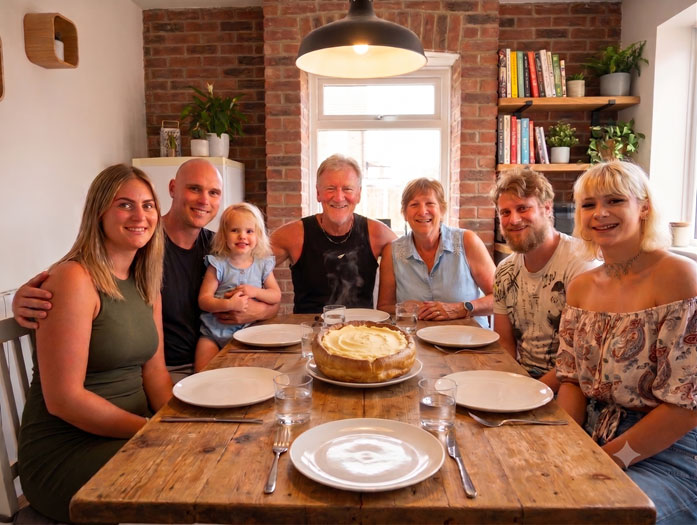
The Only Pie is Essex!
JIMMYS FAMILY PHOTO
England · Recipe No. 6
The Only Pie is Essex!
Essex Maris Piper Mash
Mature Cheddar
Now you don’t get more Essex than Jimmy Doherty, friend of Jamie Oliver and owner of Jimmy’s Farm. On his Farm, Jimmy raises rare breeds of both Beef and Pork, which are then used in his on-site Restaurant. We love that Jimmy’s Wildlife park has rescued animals in need and we are proud to include his cause in our charity box.
‘The Only Pie is Essex’ recipe pays homage to his work and indeed to the people of Essex.
Method - Preheat oven to 350°F.
To a large pan add the potatoes, add cold water until the potatoes are covered and bring to a boil. Turn down to a low boil and cook for 20 minutes until tender.
Drain the potatoes in a colander and add back to the pan. Mash until smooth and add the butter, milk, salt and pepper to taste. Mix well and set aside.
For the filling:
Add vegetable oil to a heavy skillet over medium-high heat and add 1/2 of the beef. If the pan is too crowded, the meat will not brown, it will boil. Season with half of the salt and pepper, sauté until browned. Remove and set aside, repeat with the other half of the beef.
To the drippings (add more oil if needed) add the onion, cook until softened. Stir in the carrots, garlic and thyme, cook for 1 minute.
Add the tomato paste and Worcestershire sauce, mix well. Sprinkle the flour and mix in well, cook for 1 minute.
Add the beef stock and bring to a simmer. Cook for 5 minutes until some of the liquid has reduced.
Stir in the beef and turn off the heat. Transfer the beef to your preferred dish and top with the mashed potato, grated cheese and breadcrumbs. Bake for 30 minutes until the top is golden.
For the Filling
- 500g Rare Breed minced Beef
- 250g Minced Essex Pork
- 1/4 teaspoon Ground Black Pepper
- 1 medium Onion, chopped
- 2 medium Carrots, sliced
- 2 cloves Garlic, finely chopped
- 1 1/2 teaspoons Fresh Thyme, finely chopped
- ½ Teaspoon Ground Bay leaves
- 1 tablespoons Tomato Puree
- 2 teaspoons Worcestershire Sauce
- 1 teaspoon GF Flour
- 2 Beef Stock cubes
For the Mash
- 500g (17.5oz) Maris Piper Potato, peeled and cut into chunks
- 50g (2oz) Butter
- 50ml (2oz) Milk
- 1/4 teaspoon Salt
- A pinch of Ground White Pepper
- 1/2 cup Grated Mature Cheddar Cheese
Drink of choice
Now, what could be better than a cold pint of ‘Essex Gold Bullion Cider’, brewed by the Big Bear Cider Mill, made from hand-picked and crafted Apples from the Essex country side.
https://www.ciderhub.co.uk/producer/the-big-bear-cider-mill/

The Suffolk ‘Dingley Dell’ Cottage Pie
Suffolk photo – Sarah, Gary & Grace
England · Recipe No. 7
The Suffolk ‘Dingley Dell’ Cottage Pie
Suffolk Herb Mash
Ashmore Smoked Cheese
This is a great alternative to the Pork mince in my recipes. Wild boar has a distinctive texture and bears little resemblance to pork, in fact, it looks more like steak and has a taste somewhere between pork and venison. In this recipe, I have suggested that the meat filling is cooked over a longer period of time, helping to tenderise the meat. The addition of fresh lemons also helps with the tenderizing process.
Kent and Sussex host the UK's largest wild boar population (estimated around 1,000). Descended from farm escapees following the 1987 Great Storm, these free-roaming populations are primarily concentrated in the dense woodlands of the Weald, specifically around Ashford, Tunbridge Wells, and Romney Marsh.
This recipe is dedicated to Ed Sheeran who likes shepherd's pie, having mentioned it alongside pizza and sausages as part of the regular comfort foods he ate growing up. Ed grew up in Framlingham, Suffolk and like many touring Pop Stars, home cooked comfort foods are a must when you return from touring.
https://www.suffolkcheese.co.uk
Drink of choice
Probably the most well-known brewery in Suffolk, has to be Adnams, located in Southwold. Now
normally I would choose a lighter beer, but on this occasion, I am going to recommend their ‘Tally Ho’
Barley wine. It’s a very old English drink and one to be drank in moderation as it comes in at 7.2%.
https://adnams.co.uk
For the filling
- 350g (¾ lb) Minced Dingley Dell Pork
- 400g (¾ lb) Minced Beef
- 50g swede, peeled and finely diced.
- 1 Medium Carrot, peeled and sliced.
- 1 Medium Onion, peeled and finely diced.
- 2 Garlic cloves, peeled and crushed.
- 1 x Chicken Stock cube, 1 x Beef Stock cube
- Dried Sage
- Sprig of fresh Thyme
- ½ teaspoon of Ground bayleaves
- Freshly ground Black pepper
For the Mash
- Potatoes
- Fresh Chives, finely chopped
- 50g (2oz) butter
- 1 Egg Yolk.
- Sea-Salt & freshly ground black pepper
- Freshly Grated Ashmore ‘Smoked’ Cheese to top
Norfolk Gamekeepers Shepherd’s Pie
That’s a lot of pie for one Gamekeeper!
England · Recipe No. 8
The Norfolk Game Keeper Shepherd’s Pie
Norfolk ‘Foragers’ Mash
Wild Mushrooms
As you may or may not know, game meat can be quite strong and rich. By mixing it with minced pork gives it balance and the fatty pork meat enhances the flavour of the game. Now whilst I have added a hint of truffle oil to the mash, the Truffle flavour isn’t for everyone, so if you are unsure, feel free to omit this from the recipe if you prefer.
https://lobbsfarmshop.com/products/george-watkins-mushroom-ketchup-190ml
Drink of Choice
A traditional ‘Real Ale’ works really well with this recipe and in particular I really like
Speckled Hen. Equally, the perfect non-alcoholic drink would be a good old fashioned Ginger Beer, it’s
light and has a good bite.
https://www.greeneking.co.uk/our-beers/old-speckled-hen/history
https://crabbiesgingerbeer.com
For the Filling
- 350g of Mixed Game, (inc. Rabbit & Pheasant)
- (all carefully de-boned and minced)
- 400g Minced Pork
- 2 medium Carrots, peeled and diced
- 2oz Swede, peeled and finely diced
- 1 Medium Leek, finely diced
- ½ Teaspoon dried Sage
- ½ teaspoon of dried Thyme
- ½ pint Chicken stock, ½ pint Beef stock
- 1 desert-spoon of Mushroom Ketchup.
- 1 to 2 teaspoons of ready-made Creamed Horseradish Sauce
- Freshly ground Black pepper
For the ‘Foragers’ Mash
- 500g (17.5oz) Potatoes
- 200g Wild mushrooms, roughly chopped
- 50g (2oz) Butter
- 1 clove of garlic finely minced/crushed
- A hint of white Truffle Oil (optional)
- Sea-Salt & freshly ground Black pepper
‘Smithfield Market’ Shepherd’s Pie
Smithfield Photo
England · Recipe No. 9
‘Smithfield Market’ Shepherd’s Pie
London Maris Piper Mash
24mth Vintage Cheddar
Smithfield Meat Market has been in operation for more than 800 years and considered as the hub of the meat trade in the UK for many years. Surrounded by various cafes and restaurants, It seemed only fit to pay homage to this bastion of meat trading with a recipe that encompasses all things meaty, although at first glance it may seem a bit OTT.
So, let me explain the idea behind the mixed meats I have chosen. Firstly, the Pork brings to the dish an element of light but very slightly fatty meat, starting your flavour journey. The beef then provides an earthy foundation to the dish and the lamb adds a slightly punchy after taste. The Venison create a deep rich flavour with which to balance the other meats. The resulting combination is a triumph of flavours, which under normal circumstances I would not suggest to cook together, but on this occasion, it works a treat! The trick is to make sure you mix the meats very well and braise them for a good hour or more, topping up the liquid when needed.
For the Filling
- 125g Pulled Pork
- 125g Rib eye Beef (minced)
- 150g Lamb shoulder (Minced)
- 100g Venison (minced)
- A dessert spoon of Vintage Marmalade
- The juice of one Lemon
- 1 Large Leek, finely diced
- 2 Garlic cloves, peeled and crushed
- 1 small Potato, peeled and very finely grated
- 1 Carrot peeled and very finely grated.
- 50g Frozen Peas.
- ½ Pint Lamb Stock, ½ pint Beef Stock
- 1 measure of Good Port
- 1 Sprig of fresh Thyme & 1 Sprig of fresh Rosemary
- ½ teaspoons of ground bay leaves
- Freshly ground Black pepper
For the Mash
- 500g Maris Piper Potatoes
- 1 Egg Yolk
- 50g (2oz) Butter
- Sea-Salt & freshly ground black pepper
- Grated 24month Vintage Cheddar to top.
Drink of choice
A good old-fashioned cup of Rosy Lee (Tea!) Most of the workers around Smithfield worked from late at night into the early hours of the following morning to get meat ready for the traders to make their purchases. As such, until the bell sounded in the market when the market closed, tea was the drink that kept all the workers going.
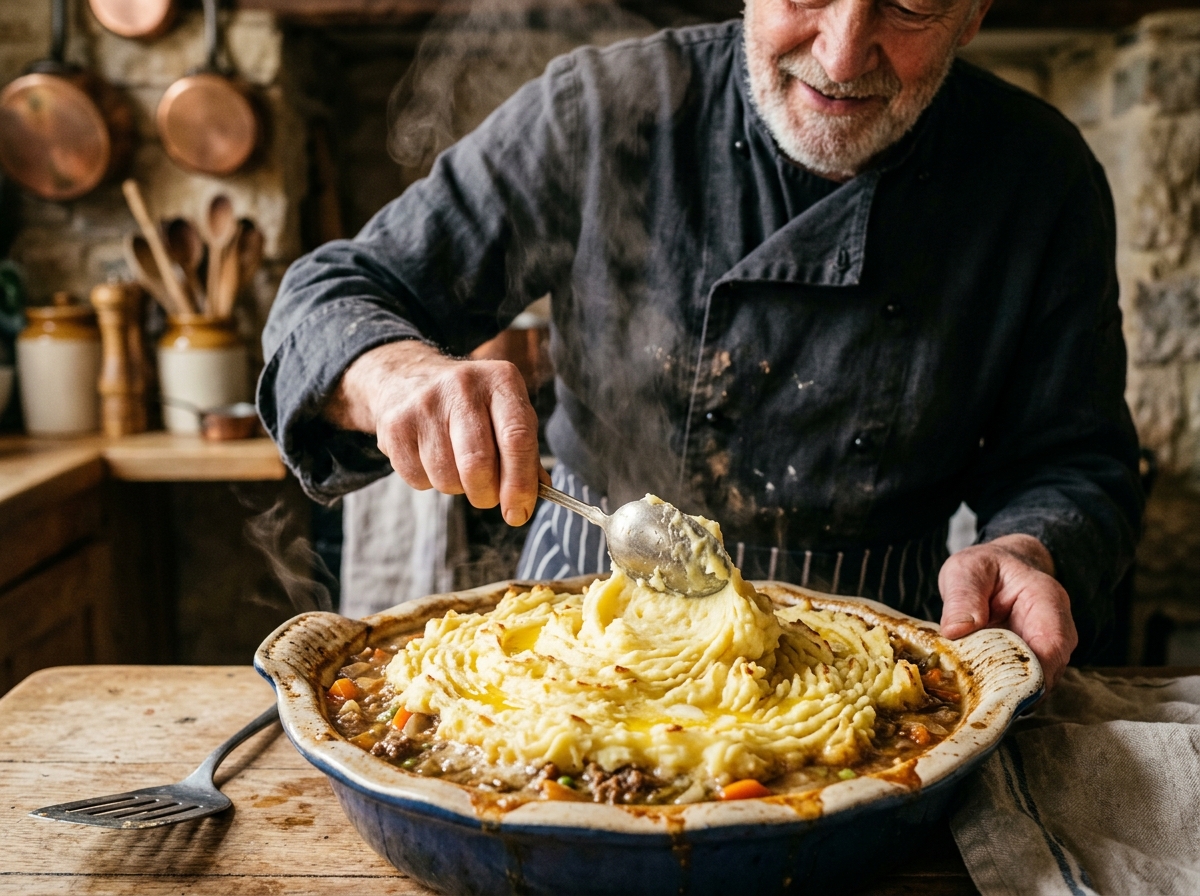
Lord Jeffrey Archer’s Shepherd’s Pie
Jeffrey Archer photo
England · Recipe No. 10
Lord Jeffrey Archer’s Shepherd’s Pie
London Piped Mash
Mango Chutney
Jeffrey Archer was a well-known member of parliament from 1969 to 1974. An intelligent and charismatic politician, he also served as a peer in the house of lord from 1992, until his retirement in 2024.
An equally successful author, his spy themed novels became an instant hit and I have to confess, that I own the full set of his books, which I thoroughly enjoyed reading.
Jeffrey’s favourite dish is Shepherd's Pie, which he’s been serving at his annual Christmas party in London (along with peas and tomato ketchup), for more than 30 years. He’s quoted as saying that his chef for the party, Nicky Swinburn, "makes the best Shepherd’s Pie in the world”. So, challenge accepted Lord Archer!
https://www.jeffreyarcher.co.uk
Method (Set the oven to 200 C/400 F/Gas mark 6)
Fry off the diced vegetables, until the onion is transparent.
Add the flour and cook for 30 seconds.
Add the lamb stock and slowly bring to the boil, stirring continuously.
Now add the minced lamb, bay leaf, Worcestershire sauce, tomato puree, chutney and seasoning. Simmer for 20 minutes, adding more stock if necessary.
Tip into a pie dish and allow to cool slightly.
Pipe the mashed potato on top/OR spread the potato and fork it up to leave the surface rough. Dot the top with butter.
Place the pie on a baking sheet in the oven for 20-30 mins or till the potato is golden brown and crisp.
For the filling
- 1 onion, finely chopped
- 1 carrot, finely chopped
- 1 stick of celery, finely chopped
- 600grams of cooked lamb, minced roughly
- oil for frying
- 2 tsp flour
- ½pt of lamb stock
- 1 bay leaf
- 1 tsp Worcestershire sauce (optional)
- 1 tsp tomato puree
- salt and pepper (and Jeffrey’s secret ingredient—1 tbsp of mango chutney)
For the Mash
- 300g of Mash potato
- 50g Butter
Drink of choice
For this recipe it has to Champagne obviously and a bottle from London’s oldest wine merchant, Berry Brother & Rudd, should go down nicely!
www.berrybros.co.uk
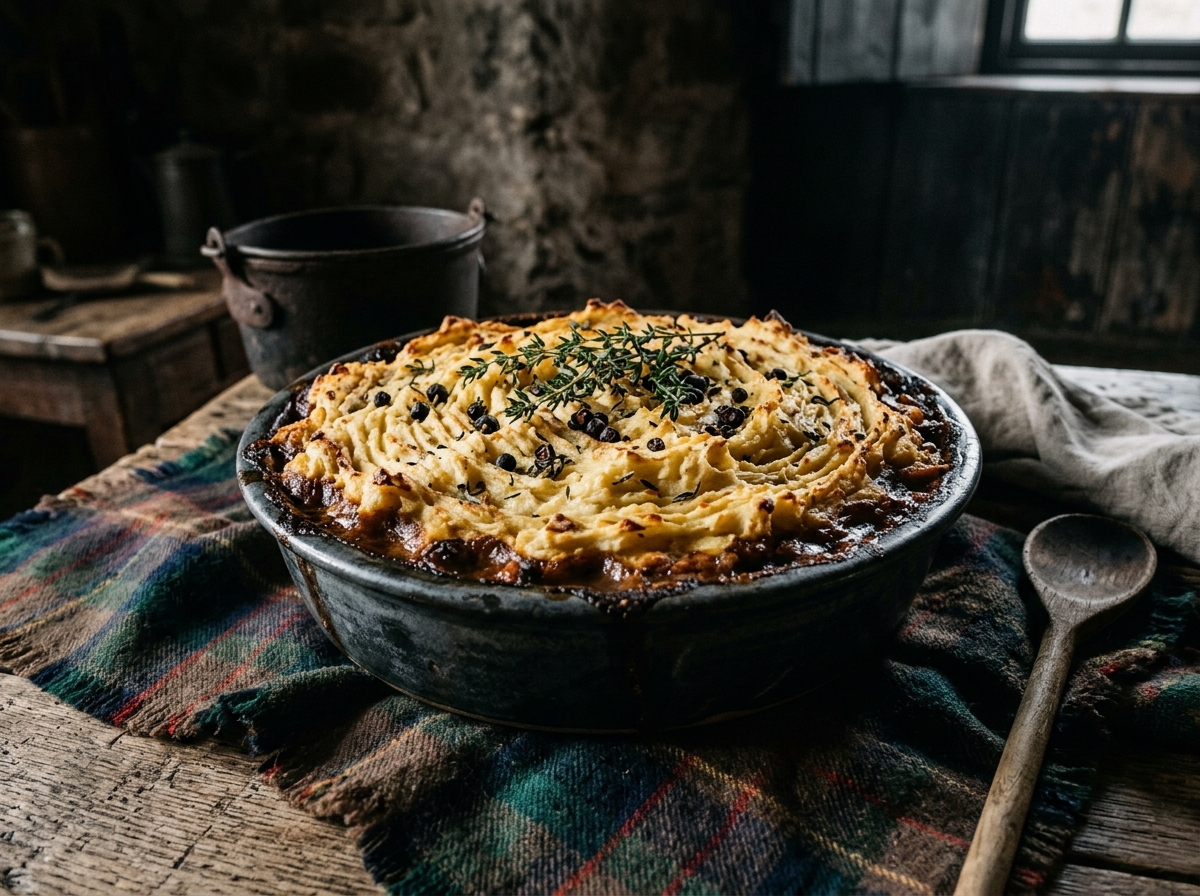
CHRIS AND FAMILY IN YORK
WHEN I AM NEXT IN YORK, I’LL POP-OVER!
England · Recipe No. 11
The Yorkie ‘Pop-Over’
Yorkshire Giant Yorkshire Pudding
Mature Cheddar
This recipe comes with its own serving container. Essentially, this is a Cottage Pie, placed inside a giant Yorkshire pudding or ‘Popover’ as the American tend to call them. The secret is that once the Giant Yorkshire pudding has been cooked, let it cool for at least 20 mins, then coat the inside with a few layers of egg-wash and bake for another 5 mins which seals the Yorkshire. Then drain most of the gravy from the mince and set aside. Place a mash layer on the bottom and add the mince. This recipe makes a nice change and has that wow factor when serving.
My dear friend Chris and her family live just outside York and next time I am ‘up North,’ I’m going to swing by and cook her this recipe!
Method
To a large pan add the potatoes, add cold water until the potatoes are covered and bring to a boil. Turn down to a low boil and cook for 20 minutes until tender. Drain the potatoes in a colander and add back to the pan. Mash until smooth and add the butter, milk, salt and pepper to taste. Mix well and set aside. Preheat oven to 350°F.
For the filling:
Add vegetable oil to a heavy skillet over medium-high heat and add 1/2 of the beef. If the pan is too crowded, the meat will not brown, it will boil. Season with half of the salt and pepper, sauté until browned. Remove and set aside, repeat with the other half of the beef.
To the drippings (add more oil if needed) add the onion, cook until softened. Stir in the carrots, garlic and thyme, cook for 1 minute. Add the tomato paste and Worcestershire sauce, mix well. Sprinkle the flour and mix in well, cook for 1 minute.
Add the beef stock and bring to a simmer. Cook for 5 minutes until some of the liquid has reduced.Stir in the beef and turn off the heat. Transfer the beef to your preferred dish and top with the mashed potato, grated cheese and breadcrumbs. Bake for 30 minutes until the top is golden.
For the filling
- 1 tbsp of Olive Oil
- 500g Rare Breed minced Beef
- 250g Minced Essex Pork
- 1/4 teaspoon Ground Black Pepper
- 1 medium Onion, chopped
- 2 medium Carrots, sliced
- 2 cloves Garlic, finely chopped
- 1 1/2 teaspoons Fresh Thyme, finely chopped
- ½ Teaspoon Ground Bay leaves
- 1 tablespoons Tomato Puree
- 2 teaspoons Worcestershire Sauce
- 1 teaspoon GF Flour
- 2 Beef Stock cubes
For the mash
- 500g (17.5oz) Maris Piper Potato, peeled and cut into chunks
- 50g (2oz) Butter
- 50ml (2oz) Milk
- 1/4 teaspoon Salt
- A pinch of Ground White Pepper
- 1/2 cup Grated Mature Cheddar Cheese

KEITH RICHARDS
DON’T BUST HIS CRUST, BABY!
England · Recipe No. 12
Keith Richards Shepherd’s Pie
England Raw Onion Layer
Cheddar Cheese
Keith Richards' famous pre-show Shepherd's Pie ritual involves an absolute rule: nobody touches the crust before he does. The legendary Rolling Stone once delayed a massive 1989 concert in Toronto because a crew member or caterer had already dug into his backstage pie. Luckily the cater was able to conjure up a replacement Shepherd’s Pie to ensure that, the show must go on!
Credited to his late bodyguard, Big Joe Seabrook, the secret to Keith's preferred version is chopping up an extra layer of raw, fresh onions to scatter right over the meat just before spreading the mashed potato crust on top, adding an extra kick of zest as it bakes.
Method
Heat the oil in a medium pan, add carrots, onion and garlic . Add the carrot (Keep half the chopped onion aside for later).
When soft, turn up the heat, add the lamb and brown, drain of any excess fat.
Add the tomatoes, HP Sauce and a pinch of Salt and pepper.
Pour over the stock, bring to the boil, then cover and simmer for 40 mins, uncovering about halfway.
For the mash – preheat the oven to 180c/fan 160c, Gas mark 4 before making the mash.
Boil the potatoes for 10 – 15 mins until tender. Drain, then mash with the butter and milk.
Put the mince in an ovenproof dish. And don’t forget my top tip, add the remaining chopped onions to the top of the mince for extra zest!
The top with the mash, spreading evenly across the dish.
Bake for 25 mins until the top is starting to colour and the mince is bubbling.
Place under a hot grill to crisp the top if required.
And last, but not least… Lashings of HP Sauce!
For the Filling
- 1/2 Onion, roughly chopped
- 500g Quality minced Lamb
- Worcester Sauce – Large Splash
- 250ml Lamb or vegetable stock
- 1 Medium carrot roughly chopped
- 400g can of chopped tomatoes
- 2 cloves of Garlic, finely chopped
- 1 Tbsp Olive Oil
For the Mash
- 1/2 Onion, roughly chopped
- 1Kg of Potatoes, roughly cut
- Splash of milk for the mash, 50ml to 100ml
- 80g butter
- Salt & Pepper to season
- Cheddar Cheese for top if desired
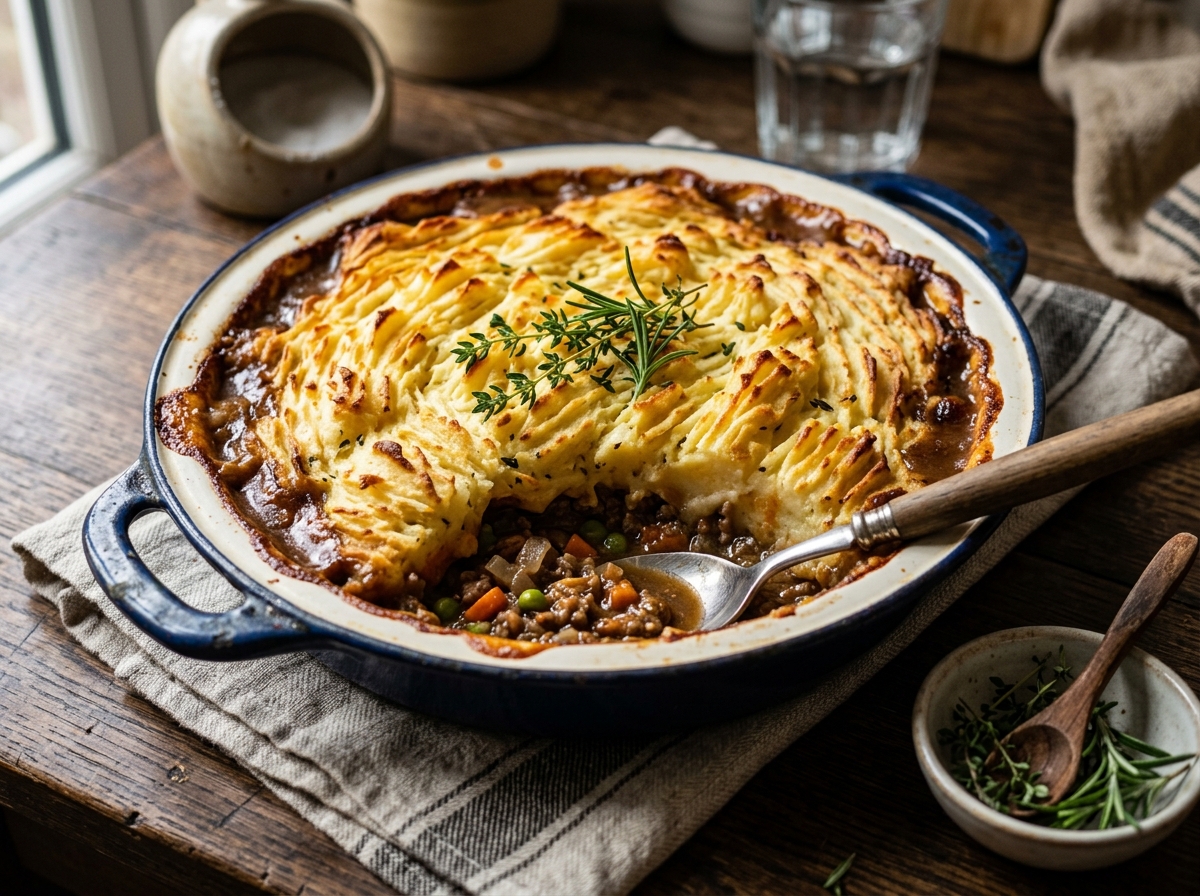
‘St Georges’ Shepherd’s Pie
ST GEORGES Photo
England · Recipe No. 13
‘St Georges’ Shepherd’s Pie
England Dragon Stout Gravy
Vintage Cheddar
Saint George, also known as ‘George of Lydda’, was a Christian who is venerated as a saint in Christianity. According to tradition he was a soldier in the Roman army. His parents were Christians of Greek origin and his father, Gernotius, was a Cappadocian serving in the Roman army.
In his Oxford Dictionary of Saints, David Hugh-Farmer explains that St George was adopted as patron saint in the middle ages by England and Catalonia, as well as by Venice, Genoa and Portugal, because he was the personification of the ideals of Christian Chivalry.
When you next celebrate St Georges Day, try this recipe for your family lunch. What could be more British!
To a large pan add the potatoes, add cold water until the potatoes are covered and bring to a boil. Turn down to a low boil and cook for 20 minutes until tender.
Method (Preheat oven to 180°C/350°F).
Drain the potatoes in a colander, and add back to the pan. Mash until smooth and add the butter, milk, salt and pepper to taste. Mix well and set aside.
Add vegetable oil to a heavy skillet over medium-high heat and add 1/2 of the beef. If the pan is too crowded, the meat will not brown, it will boil. Season with half of the salt and pepper, sauté until browned. Remove and set aside, repeat with the other half of the beef.
To the drippings (add more oil if needed) add the onion, cook until softened. Stir in the carrots, garlic and thyme, cook for 1 minute. Add the tomato paste and Worcestershire sauce, mix well. Sprinkle the flour and mix in well, cook for 1 minute. Add the beef stock and bring to a simmer. Cook for 5 minutes until some of the liquid has reduced. Stir in the beef and turn off the heat. Transfer the beef to your preferred dish and top with the mashed potato, grated cheese and breadcrumbs. Bake for 30 minutes until the top is golden.
For the Filling
- 1 tablespoon Vegetable Oil
- 750g pounds Best British Beef
- 1 teaspoon Salt
- ¼ teaspoon Ground Black Pepper
- 1 medium Onion, chopped
- 1 large Carrot, finely sliced
- 2 cloves Garlic, finely minced
- 1 ½ teaspoons Fresh Thyme, finely chopped
- 1 tablespoons Tomato Puree
- 2 teaspoons Worcestershire Sauce
- 1 bottle of Dragon Stout (some for gravy, some for sipping!)
- 1 teaspoon Flour
- 1 cup Beef Stock
For the Mash
- 500g Potato, peeled and diced
- 50g (2oz) Butter
- Milk
- ½ teaspoon Salt, or to taste
- ¼ teaspoon Ground Black Pepper
- 1 tablespoon Bread Crumbs
- 1/2 cup Grated Vintage Cheddar Cheese
Drink of choice
What can be better than a tankard of Ale. Try a bottle of Dragon Stout for size. Whilst it originated from Jamaica, it goes perfectly with this dish as St George loved to down a Dragon or two!
https://www.dragonstout.com
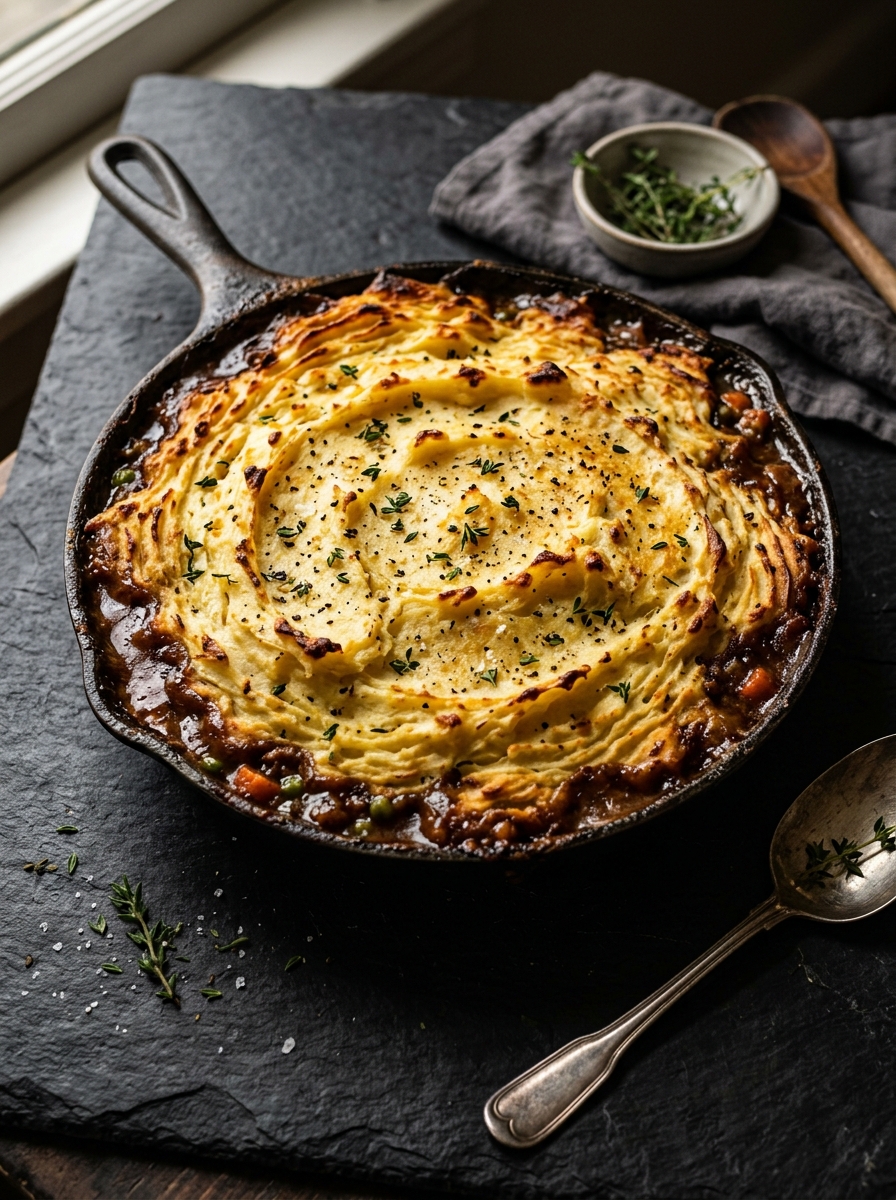
The ‘George & Dragon’ Shepherd’s Pie
Photo
England · Recipe No. 14
The ‘George & Dragon’ Shepherd’s Pie
England Fiery ‘Dragons’ Layer
Cheddar Cheese
The tradition tells that a fierce dragon was causing panic in the city of Silene,
Libya, at the time George arrived there. In order to prevent the dragon for devastating people from the
city, they gave two sheep each day to the dragon. It is said that George saved the Kings Daughter from the
dragon and the King was so grateful that he offered him treasures as a reward for saving her life.
George
refused it and instead gave these to the poor, who were so amazed at what they had witnessed that they in
turn became Christians and were all baptized.
The goodness of St George is epitomised this Shepherd’s Pie , combined with a fiery ‘Dragons’ layer.
Method (Preheat oven to 350°F).
To a large pan add the potatoes, add cold water until the potatoes are covered and bring to boil. Turn down
to a simmer and cook for 20 minutes until tender.
Drain the potatoes in a colander, and add back to the pan.
Mash until smooth and add the butter, milk, salt and pepper to taste. Mix well and set aside.
For the filling
We then need to create the spicy ‘Dragon’ base layer,
which gives this Shepherds Pie its unique flavour.Start by adding the two tins of diced plum tomatoes into a saucepan, together with the pinch of salt, a
pinch of Black Pepper and two teaspoons of dark sugar.
Dice one or two fresh red chillies and add to the
mixture (obviously you can add as much as chilli as you want to suit your taste buds. You could even use
hotter chillies if you are feeling brave, or want to surprise your guests!) Bring to the boil and simmer
very slowly.
The aim is to reduce the liquid and intensify the flavour and create a chunky tomato base. This
is then added to the base of the dish for the meat to sit on. Add vegetable oil to a heavy skillet over medium-high heat and add 1/2 of the beef. If the pan is too
crowded, the meat will not brown, it will boil. Season with half of the salt and pepper, sauté until
browned.
Remove and set aside, repeat with the other half of the beef. To the drippings (add more oil if needed) add the onion, cook until softened. Stir in the carrots, garlic
and thyme, cook for 1 minute. Add the tomato paste and Worcestershire sauce, mix well. Sprinkle the flour and mix in well, cook for 1
minute.Add the beef stock and bring to a simmer.
Cook for 5 minutes until some of the liquid has reduced. Stir in the beef and turn off the heat.
Transfer the beef to your preferred dish and top with the mashed potato, grated cheese and breadcrumbs.
Bake for 30 minutes until the top is golden.
For the Filling
- 1 tablespoon Olive Oil
- 450g/1lb Minced Beef
- 1 teaspoon Salt
- 1/4 teaspoon Ground Black Pepper
- 1 medium Onion, finely diced
- 2 medium Carrots, sliced
- 2 cloves Garlic, minced
- 1 ½ teaspoons Fresh Thyme, finely chopped
England · Recipe No. 14
The ‘George & Dragon’ Shepherd’s Pie
England Fiery ‘Dragons’ Layer
Cheddar Cheese
- 1 tablespoon Tomato Paste
- 2 teaspoons Worcestershire Sauce
- 1 teaspoon Flour
- 1 cup Beef Stock
For the Mash
- 3 Lbs Potato, peeled and cut into large chunks
- 4 tablespoons Unsalted Butter, melted
- 1/4 cup Milk
- ½ teaspoon Salt, or to taste
- ¼ teaspoon Ground Black Pepper
- ½ cup Grated Cheddar Cheese
For the ‘Dragons Layer’ (Didi you see what I did there!)
- 2 tins of chopped Plum Tomatoes (drained)
- A pinch of Black Pepper & a pinch of Salt
- Fresh Red Chillies, finely diced
- 1 clove Garlic, chopped and crushed
Drink of choice
As with the ‘St Georges Day’ recipe, I recommended the Dragon Stout from Jamaica, or a good old fashioned strong Ale.
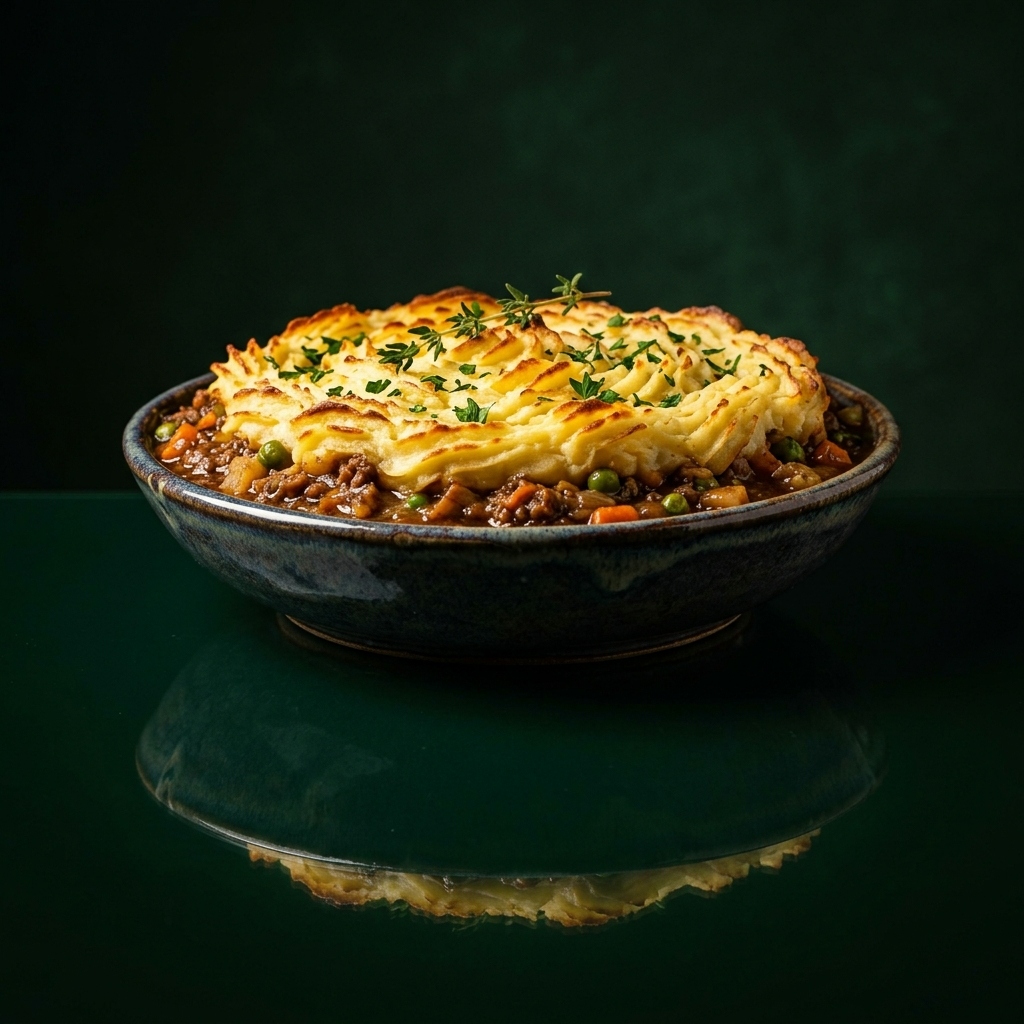
Black Country Special with Savoury Ducks
Photo – Alan & Ghilaine
England · Recipe No. 15
Black Country Special with Savoury Ducks
West Midlands Savoury Ducks
Cheddar Cheese
The west midlands area of England is also referred to as the Black country. This is because thousands of ironworking foundries, forges, glassworks and coal mines blanketed the region in heavy black smoke by day. This recipe pay homage to the Industrial heritage and incorporates a northern delicacy known as either savoury ducks, or faggot. These are basically savoury meatballs made from pig offal and are thought to originate as far back as the middle-ages, although first put in print around 1843. The addition of savoury ducks in th dish really do elevate the flavour.
My good friend Alan comes from the Staffordshire area, just north of the Black country and is a self-confessed foodie. Shepherd’s Pie is one of the home cooked meals that he looks forward to when he arrives back in the UK after each deployment abroad. There are only so many local dishes you can eat when working abroad, before you start craving good old fashioned home cooked food. So, this one is for Alan.
https://www.dmorrisbutchers.co.uk/product/savoury-ducks-individual/
For the Filling
- 300Kg Minced Pork
- 300Kg Minced Beef
- 100g Savoury ducks or faggots
- 1 large carrot, finely diced
- ½ Small Swede, finely diced
- 1 Large Onion
- 50g of Marrow Fat peas
- ½ pint of good ale.
- 1 Organic Chicken Stock cube, 1 Beef Stock cube
- Dried Sage
- ½ tsp Ground Bayleaves
- Freshly ground Black pepper
For the Mash
- Potatoes
- A few large knobs of butter
- One egg yolk
- Sea-Salt & freshly ground black pepper
- Freshly Grated Cheddar Cheese to top
Drink of choice
It has to be ‘Iceberg Grand Crew’ from the Titanic Brewery.
https://www.titanicbrewery.co.uk/shop/bottled-beers
Old Colonial ‘Poona’ Shepherd’s Pie
Photo of Katie & Family
England · Recipe No. 16
Old Colonial ‘Poona’ Shepherd’s Pie
Poona ‘Raja’s’ Mash
Garam Masala
Pune, known as Poona until 1978, is the second largest city in the state of Maharashtra and the 7th most populous city in India, with an estimated population of 7.4 million as of 2020. It has been ranked as "the most liveable city in India" several times.
This recipe is for our friend Katie Coomes who has fond memories of ‘Poona Pie’ as a kid. This is my version for Katie and I hope it hits the spot!
https://www.abelandcole.co.uk/goat-mince-pasture-fed-the-green-butcher?cid=8446
For the Filling
- 750 (26.5oz) of Minced Goat or Mutton
- 1 large Parsnip
- 1 large Carrot, peeled and diced
- 1 large Onion, peeled and diced
- 2 large Garlic cloves, chopped and pureed.
- 6 large mushroom, chopped and sliced
- 1 small red pepper, chopped and diced
- 50g 2oz Red Lentils
- 1 teaspoon Garam masala
- ½ teaspoon of dried Cumin
- 1-2 teaspoons of mild Curry powder according to taste
- 1 pint Lamb Stock
- Freshly ground Black pepper
For the ‘Raja’s’ Mash
- 250g (9oz) White Potatoes (Kufri Badshah variety if you are in India).
- 250g (9oz) Sweet Potatoes
- 2 teaspoons of Mustard Oil (or a teaspoon Olive oil and half a teaspoon of English Mustard!)
- A pinch of Garam Masala
- A pinch of Turmeric
- Fresh Chopped Parsley/Fresh Chopped Mint
- 25g (1oz) Butter
- Sea-Salt & freshly ground Black pepper
Drink of choice
Under the heat of the Indian (or English!) sun, a cool beer always goes down very nicely. Kingfisher beer is great with Shepherd’s Pie. If you are looking for the non-alcoholic option, a Mango Lassi is an equally cool treat. Yogurt, Mangos and water blended together make one of India’s favourite drinks.
https://www.kingfisherbeer.co.uk
Mancunian Black Pudding Special Cottage Pie
Chive & Cheddar’ Mash
England · Recipe No. 17
Mancunian Black Pudding Special Cottage Pie
Manchester ‘Chive & Cheddar’ Mash
Mature Cheddar
Manchunians love their Black pudding, which is normally eaten with a full English Breakfast. However, to give your Cottage Pie a real zing, the addition of Black Pudding into the minced beef gives the taste a lovely rich flavour. Topped with Chive and Cheddar Mash, this is a real family treat.
When I think of Manchester, it Reminds me of our good friend Rick Sheldon and his lovely family. Rick is true northern boy through and through and a traditionalist when it comes to home cooked Shepherd’s Pie, definitely part of his family food memory. This one’s for you Rick.
https://www.buryblackpuddings.co.uk/history/#
For the filling
- 750g Minced Beef
- 100g Black pudding
- 1 medium Onion, finely diced
- 2 medium Carrots, diced
- 1 medium Parsnip, diced
- 50g (2oz) Peas
- 1 pint Beef Stock
- 50g Wild Cranberry Sauce.
For the ‘Chive & Cheddar’ Mash
- 500g (17.5oz) Potatoes
- 50g (2oz) Butter
- 50g finely chopped Chives
- ½ teaspoon Sea-Salt
- ¼ Teaspoon freshly ground Black pepper
- 50g Mature Cheddar
Drink of Choice
It’s got to be either a pint of Boddingtons Ale ‘The Cream of Manchester’ or ‘Vimto’, a beloved sweet, mixed-fruit soft drink created locally by John Noel Nichols.
https://www.jwlees.co.uk/boddingtonscask
https://www.vimto.com
The Original Cumberland Pie
Chive & Cheddar’ Mash
England · Recipe No. 18
The Original Cumberland Pie
Cumberland Breadcrumb Crust
Eden Chieftain Cheddar
Cumberland is the beautiful historic county in the extreme northwestern England, bounded on the north by Scotland, on the east by the historic counties of Northumberland and Durham, and on the south by the historic counties of Westmorland and Lancashire. Cumberland is presently part of the administrative county of Cumbria.
Early versions of Cumberland Pie used a traditional pastry crust instead of mashed potatoes and contained local meats like game or Herdwick mutton mixed with dried fruits and spices. The modern version of the ‘Cumberland Pie’ includes the feature layer of grated mature cheddar cheese, mixed with breadcrumbs sprinkled over the mashed potato, to create a crunchy golden crust. This recipe is a mix of beef and lamb.
My version of this dish pays tribute to the original ingredients.
For the filling
- 2tbsp olive oil to cook
- 750g Minced Beef
- 1 medium red onion, peeled and diced
- 2 garlic cloves, peeled and minced
- 1 x 150ml (6oz) Glass dry red wine
- 1 tbsp tomato paste
- 1tbsp Worcester sauce
- 1 Pt Organic Beef stock
- 1 teaspoon dried thyme
- Sea salt and freshly ground black pepper to season
For the Mash
- 500g White potatoes, peeled & cut into 1″ cubes
- 75g butter
- 50 -75g Double cream
- 200gof GF Bread-crumbs
- 100g Eden Chieftain Vintage Cheddar
- A pinch of salt and pepper to season
https://www.applebycreamery.co.uk/product/eden-chieftain/
Drink of choice
Cumbria is blessed with a number of breweries, including the Jennings Brewery at Cockermouth. So, what could be more fitting but a pint of their fine ale, emblazoned with the same name as the famous Cumberland Pie. ‘Cumberland’ - Golden Beer.
https://www.jenningsbrewery.co.uk/beers/cumberland-5/
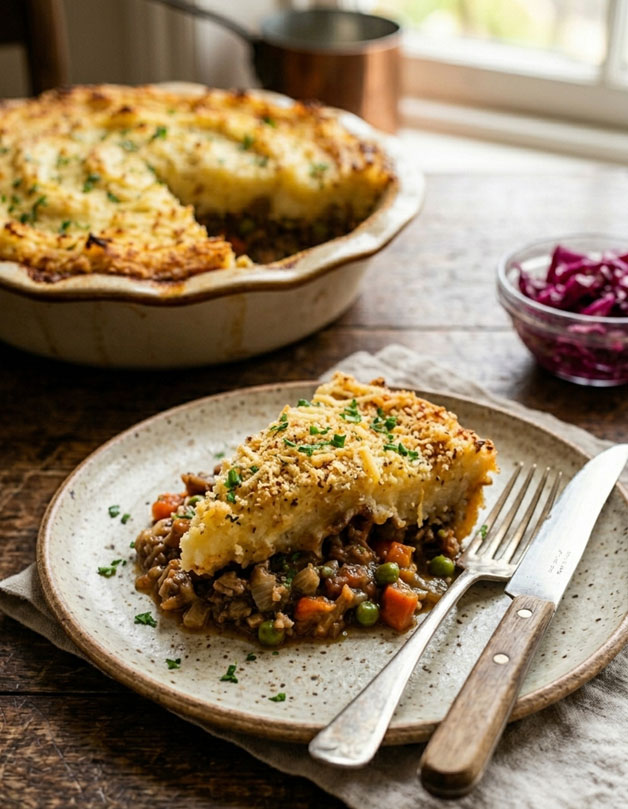
CUMBERLAND PIE
The Original Cumberland Pie
England · Recipe No. 19
The Lancashire Hot Shot
Lancashire Parsley Mash
Kirkham’s Lancashire
Laurel and Hardy were an incredible duo and amongst my favourite comedians to ever grace this planet. They brought a real sense of friendship to every film they created. Not many people know, but Stan Laurel was actually born in Ulverston, Lancashire and was a real lover of British home cooked foods. So I would like to dedicate this recipe to these my real life comedy heroes, their friendship and the laughter they brought to us all.
https://www.thecourtyarddairy.co.uk/shop/buy-cheese/hard-cheese/buy-mrs-kirkhams-lancashire-cheese/
Mr Fogg's ginger beer typically refers to the brewed ginger beer used as a mixer or in cocktails at the Mr Fogg's Victorian-themed London bar collection, historically supplied by premium brands like Franklin & Sons or Fentimans, or vintage stoneware bottles from 19th-century bottlers like Samuel Fogg & Co.
https://www.fentimans.com/products/ginger-beer
For the Filling
- 650g Lancashire Minced lamb
- 100g Lambs Kidneys, finely diced
- 1 Large Onion
- Organic Chicken Stock
- A sprig of Thyme
- 1oz of fresh Rosemary
- 25ml Worcester Sauce
- ¼ Teaspoon of Ground bay leaves
- A pinch of freshly ground black pepper
For the Mash
- 500g Potatoes
- A few large knobs of butter
- Fresh Parsley
- Sea-Salt & freshly ground black pepper
- Freshly Grated ‘Kirkham’s Lancashire’ Cheddar Cheese
Drink of choice
Stan Laurel used to love Ginger Beer and what could be better than the famous Samuel Foggs Ginger Beer. This first appeared for sale in 1873 and Foggs Ginger beer can still be enjoyed today.
THE LANCASHIRE ‘HOT SHOT’
The Lancashire Hot Shot
England · Recipe No. 20
The Grimbarian Cottage Pie
Grimsby Rustic Mash
Cote Hill ‘Lindum’
Located on the North-west coast of England, Grimsby is more famously known as being the largest fishing port in the world during the mid-20th century, its iconic 300-foot Dock Tower, and its world-renowned traditional smoked fish.
Grimbsy to me is a place or hard working people, whether on the docks, at sea, or all the other local industries that struggle to survive, it’s always been a place
If I think about someone who epitomises Grimsby and who has inspired me to be a better man, it has to be Guy Martin. This down-to-earth no-frills man has already achieved so many things in his life and not least, the ability to cook a great Shepherd’s Pie. So, this. recipe is dedicated to you Guy. Cheers.
https://www.cotehill.com/product/lindum
For the Filling
- 750g Minced Hogget Lamb
- 100g Shallots
- 2 Carrots, finely diced
- 1 small tin of Marrow Fat Peas
- Organic Lamb Stock
- Worcester Sauce
- ¼ teaspoon Ground Bay leaves
- A sprig of Rosemary and one of Thyme
- A good dessert spoon of Cumberland sauce
- Sea-Salt & freshly ground Black pepper
For the Rustic Mash
- 500g Maris Potatoes
- 100g Green Cabbage
- 4 Spring Onions, top & tailed, finely sliced
- Butter
- Pinch of Nutmeg
- 1 Egg Yolk
- Sea-Salt & freshly ground Black pepper
- Freshly grated Cote Hill ‘Lindum’ Cheese
Drink of choice
It has to be a pint of local ale to accompany the Grimbarian Shepherd’s Pie and the name of this beer sums up Guys attitude to life and how it made it in the world, Hard Graft.
https://docksbeers.com/docks-shop/hard-graft-440/
The Grimbarian Cottage Pie
Guy Martin, his wife Sharon, daughter Dottie and their two labs, Nigel and Steven!
England · Recipe No. 21
‘The Cornish Tasty’ with Cornish Cruncher Cheese
Cornwall Floury Mash
Cornish Cruncher
We have great family memories of holidays in Cornwall, mainly caravanning around the countryside. Now one of the main foods that everyone wants to try when they visit Cornwall is a proper Cornish Pasty. Famous around the world, it’s the ultimate food on the go, all wrapped up in its own packaging. Originally made by the wives of tin miners, the pasty was a cheap and handy lunch.
My ‘Cornish Tasty’ recipe, pays homage to the great Pasty and its very tasty ingredients, topped off by one of England’s Best Chesses, the Davidstow 36 Month Reserve Cheddar, or as it is sometimes known, Cornish Cruncher.
I dedicate this recipe to our friend Pippa King who lives in Redruth Cornwall and whom supported my wife on her journey back to health. If you have never tried Theta Healing before, then I heartily suggest you try it. Thank you, Pippa
https://www.cornwallwellbeing.co.uk
https://www.davidstowcheddar.co.uk/en/products/cheddars/reserve
For the Filling
- 750g Minced Beef Skirt
- 1 large onion, roughly chopped
- 2 carrots, diced
- 100g Swede, diced
- 2 garlic cloves, crushed & finely chopped
- 2 tbsp olive oil
- 1 tbsp plain GF flour
- 1 tsp fresh thyme leaves
- 1 tsp Worcestershire sauce
- 300ml Beef stock or gravy
- Salt and freshly ground black pepper
For the Filling
- 750g Minced Beef Skirt
- 1 large onion, roughly chopped
- 2 carrots, diced
- 100g Swede, diced
- 2 garlic cloves, crushed & finely chopped
- 2 tbsp olive oil
- 1 tbsp plain GF flour
- 1 tsp fresh thyme leaves
- 1 tsp Worcestershire sauce
- 300ml Beef stock or gravy
- Salt and freshly ground black pepper
For the Mash
- 750g floury potatoes
- 50ml milk
- 50g butter
- Cornish Cruncher Cheese
Drink of choice
For me, it has to be ‘Doombar’ Ale. Brewed in Rock, Cornwall, this is one of my favourite ales and goes very nicely with Shepherd’s Pie. Cheers.
https://www.sharpsbrewery.co.uk/blogs/beer/doom-bar
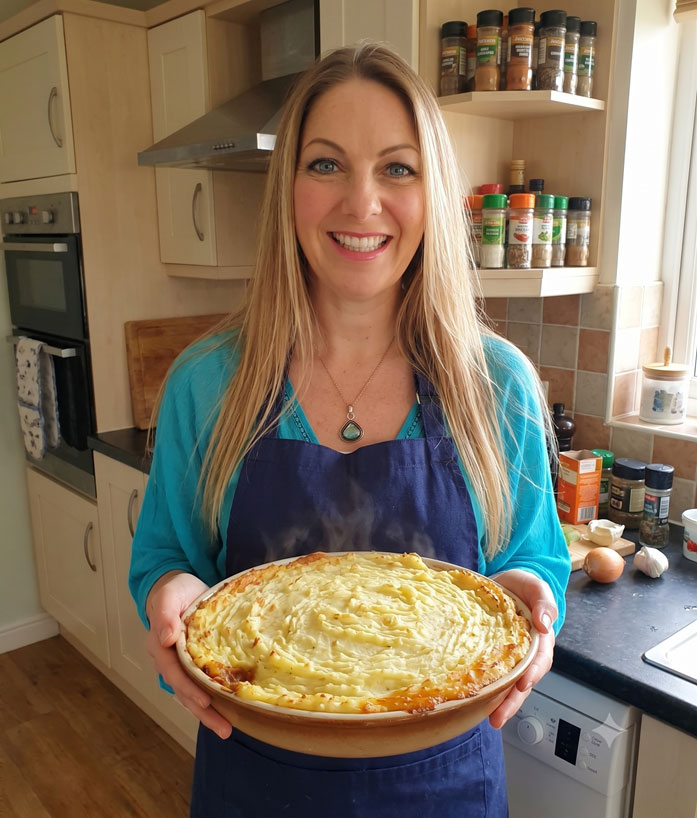
The Cornish Tasty
The Cornish Tasty, By Pippa King
England · Recipe No. 22
The Otter Valley Devonshire Dream
Devon Clotted Cream Mash
Goats Cheddar
Otter Valley is just North-west of Honiton in Devon, England and home to the fantastic Otter Valley Poultry Farm. This farm specialises in producing the finest Organic Poultry and this recipe includes their wonderful products. This Shepherd’s Pie, is a lighter version and especially for those who like poutlry.
My wife’s Grandfather, Bill, came from South Devon and was always very proud of his Devonshire roots. Getting married to Vera at the age of 18, then having survived the D-Day Landings, they spent much of their retirement back in Devon and in particular, around the South Hams area. We miss them both very much and this recipe is dedicated to them both.
https://www.quickes.co.uk/collections/other-cheese
Drink of choice
Now, whilst a very nice glass of fresh Apple Juice goes really well with this dish, to finish try something a little different. ‘Somerset Oak’ Cider Brandy. Yes, you heard it correctly, a Brandy distilled from the finest of ciders and aged in Oak barrels for 5 years.
https://www.somersetciderbrandy.com/shop-online/somerset-cider-brandy-5-year-old-1
For the filling
- 250g Minced Chicken thighs
- 500g (26oz) Minced Turkey thighs
- 75g Swede, diced
- 75g Baby Carrots, top and tailed, but left whole.
- 100g baby onions, peeled and prepared.
- 50g Frozen Peas
- 300ml Organic Chicken Stock
- 2 teaspoon of Wild Cranberry Sauce
- 1 tablespoon of Mushroom Ketchup
- Dried Sage
- ¼ teaspoon of Ground Bay Leaves
- Freshly ground Black pepper
For the Mash
- 500g Potatoes, peeled and diced
- 50g (2oz) butter
- Splash of Milk
- Fresh Parsley, finely chopped
- Sea-Salt & freshly ground black pepper
- Freshly Grated Goats Cheddar to top
The Otter Valley Devonshire Dream
Bill and Vera Photo
England · Recipe No. 23
The King of Bath
Bath ‘Roast Potato’ Mash
Pitchfork Somerset Cheddar
My best friend Graeme and his beautiful wife lived in Bath for many years. Graeme and I knew each other for nearly 50 years, through School, college and beyond. We both had a real passion for cooking and shared o many wonderful meals together, with non-stop laughter at every occasion.
Very Sadly, Graeme’s life was cut short at the age of 59, when he was stuck down with a rare form of Pancreatic cancer. Within a very short time and during the turmoil of Covid, Graeme was cruelly taken from us. Our time and the life lessons we learned together will remain with me always and in his honour, I would like to give you a Shepherd’s Pie he would have been proud of… The King of Bath.
https://www.finecheese.co.uk/products/hand-selected-pitchfork-cheddar?_pos=6&_fid=3c7b11e38&_ss=c
Drink of Choice
Graeme and I used to drink copious amounts of beer, good wine and on occasion, a very nice Vintage Port. So, with this recipe, I think we should push the boat out a bit. I would start cooking with a bottle of Innis and Gunn Ale. Then to go with the Shepherd’s Pie, indulge in a bottle of Chilean Merlot. All finished with a glass or two of Graham’s 1961 Vintage Port, accompanied by Dolcelatte cheese and water biscuits. Cheers my old mate.
For the filling
- 750g Organic Minced Hoggett Lamb
- 1 medium Leek, finely diced
- 2 Clove of Garlic, crushed and finely chopped
- 2 medium Carrots, diced
- 1 medium Parsnip, diced
- 50g Peas
- A sprig of Rosemary and a sprig of Thyme
- 50ml Mushroom Ketchup
- 300ml of Lamb Stock
- 50ml Good Vintage Port
- 2 tsp of Redcurrant Jelly
- Salt & Pepper to Season
For the ‘Roast Potato’ Mash
- 500g Potatoes
- 50g Unsalted Butter
- 50g Double Cream
- Salt & Pepper to Season
- Hand selected Pitchfork Somerset Cheddar
The King of Bath
GRAEME & JADE PHOTO
England · Recipe No. 24
‘The Kentish’ Garden of England
Kent Parsley Mash
Smoked Cheddar
This recipe is based on all good things from Kent, the region where I grew up. One of my main influencers when it came to cooking was my Mum. Without fail, Mum always gave our family the best of good old fashioned home cooked foods. Shepherd’s Pie or Cottage Pie were definitely amongst our favourite for the four brothers, I can almost taste her cooking now.
Dad was an avid gardener and would sometimes grow vegetables in the greenhouse and at the end of our garden, so occasionally we were able to enjoy home grown veggies.
Our family mealtimes could be great fun, with lively conversations and debates infused with laughter, no mobiles, Tablets or TV, just good old fashioned family connection. How lucky we were.
Mum’s cooking was generally based simple everyday meals, so this traditional Cottage Pie is in memory of her and Dad.
https://www.cheesemakersofcanterbury.co.uk/produce-info/milk-source/cow/
Drink of choice
As kids we would have had either a cup of tea, or a glass of squash with our evening meal. Later in life as we grew up beer and wine became our choice, but really only at weekends.. For this recipe, I am going to stick with a cup of tea and in particular Sainsburys, Black Organic Tea is best.
https://www.sainsburys.co.uk/gol-ui/product/sainsburys-fairtrade-tea-bags-so-organic-x80-250g
For the Filling
- 750g Minced Beef
- 1 Medium Onion
- 2 Medium carrots
- 100g of frozen peas
- 100g Frozen diced Green beans
- 300ml Beef Stock
- A sprig of Rosemary and a sprig of Thyme
- ¼ Teaspoon of Ground bay leaves
- A pinch of freshly ground black pepper
For the Mash
- 500g Potatoes
- 50g butter
- Fresh Parsley
- Sea-Salt & freshly ground black pepper
- Freshly Mature Smoked Cheddar Cheese
‘The Kentish’ Garden of England
PHOTO OF MUM DAD AND BOYS
England · Recipe No. 25
Northumbrian ‘Hodge Podge’ Shepherd’s Pie
Northumbria ‘Mish Mash’
Sweet Potato
Northumbria is a historic region and former Anglo-Saxon kingdom located in northeastern England and southeastern Scotland, stretching from the River Humber up to the Firth of Forth. Today, the name is used informally for the North-East England region, covering counties like Northumberland and County Durham.
‘Hodge Podge’ comes from an old French word, hochepot, which originally described a thick meat and vegetable stew cooked together in a pot. Now days in it use to describe a random selection of items or even an unusual mix of ingredients in a recipe or dish.
My Northumbrian ‘Hodge Podge’ Shepherd’s Pie, uses an unusual mix of ingredient, sourced from the region of Northumbria and created a rustic hearty version.
When I think of Northumbria, I am reminded of George Stephenson, who invented the steam engine. His first engine was built in 1814 and the advent of train travel revolutionised the way we lived our lives.
We were lucky enough to take a train journey from London to Edinbrugh one Christmas, the journey took as up through the East coast of England and into Northumberland past the beautiful coastal town of Berwick upon Tween.
https://lobbsfarmshop.com/products/george-watkins-mushroom-ketchup-190ml
Drink of Choice
The most popular signature drink closely tied to the historic region of Northumbria (now Northumberland and Tyne & Wear) is Lindisfarne Mead, a world-famous fortified honey wine. Or if you prefer something no-alcoholic, how about Kittys Home-made Ginger Wine.
https://www.lindisfarnemead.com
https://kittysgingerwine.co.uk
For the Filling
- 350g Minced Beef
- 200g (16oz) Minced Pork
- 200g minced Lamb
- 1 Medium Onion, finely diced
- 2 medium Carrots, peeled and diced
- 1 Medium Courgette, finely diced
- ½ Teaspoon dried Sage
- 1 teaspoon each of dried Thyme and Oregano
- 300ml Beef & Lamb Stock
- 1 desert-spoon of Mushroom Ketchup.
- Freshly ground Black pepper
For the Mish Mash
- 300g Potatoes
- 200g Sweet Potatoes
- 100g finely diced Leek
- 50g (2oz) Butter
- Sea-Salt & freshly ground Black pepper
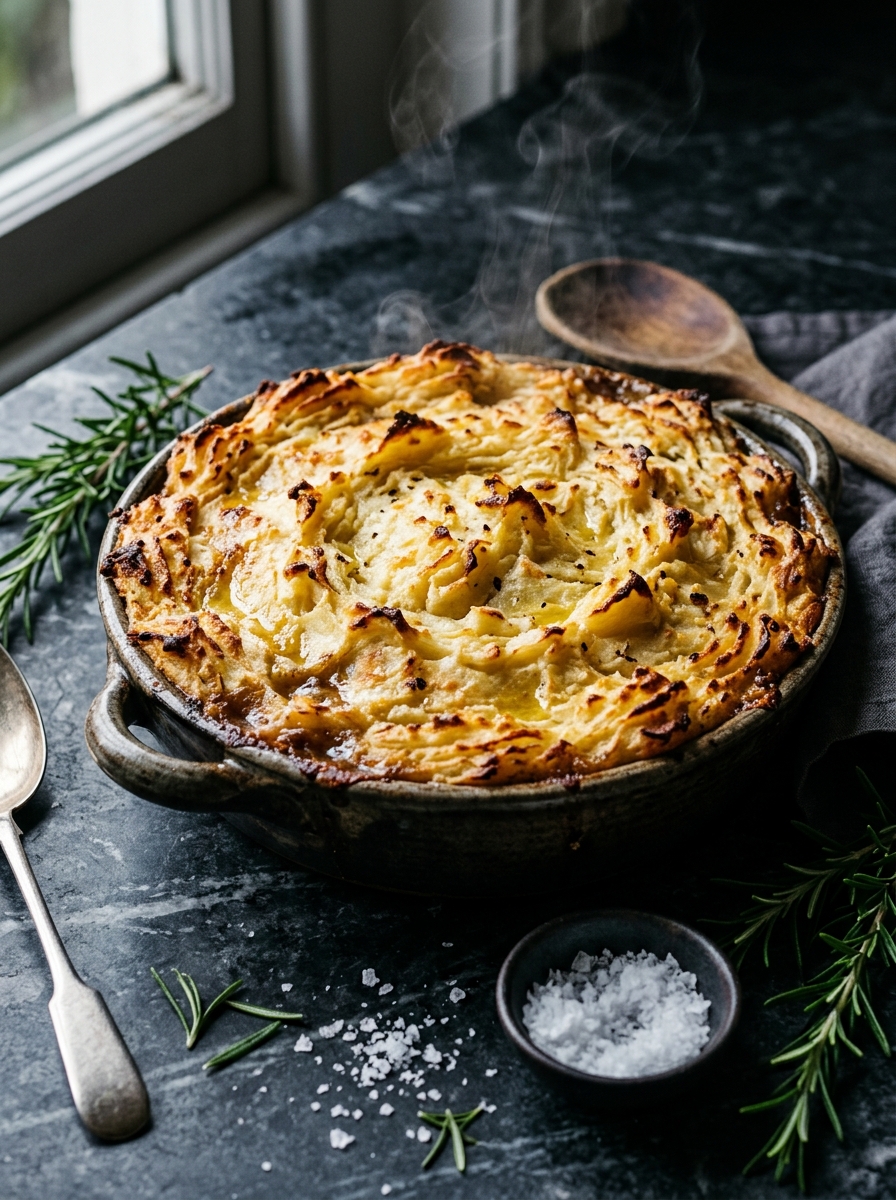
Northumbrian ‘Hodge Podge’ Shepherd’s Pie
PHOTO NORTHUMBRIA HODGE PODGE
England · Recipe No. 26
Red Leicester Special with Panhaggerty topping
Leicestershire ‘Panhaggerty’ Topping
Red Leicester
Red Leicester cheese was originally made by local dairy farmers in Leicestershire, starting in the 17th century. It was created by the same farmers who made Stilton, using their leftover surplus milk.
The cheese was naturally pale at first. In the 18th century, makers began dyeing it red or orange using annatto (a natural plant seed extract) to make it stand out and look richer.
Traditional farmhouse production died out by the 1950s, but modern artisan makers like David and Jo Clarke revived the traditional raw-milk method at Sparkenhoe Farm in 2005.
Panhaggerty topping refers to a Pie of thinly sliced Potatoes, Sliced Onions and grated cheese. So, for this recipe, we are going to deviated away from a normal mash topping.
https://www.leicestershirecheese.co.uk
Drink of Choice
For the filling
- 750g Minced Lamb
- 100g of Cooked Harricot Beans
- 1 medium Onion, finely diced
- 2 medium Carrots, diced
- 50g Marrow-Fat Peas
- 300ml Lamb Stock
- 50g Cumberland Sauce.
- ½ teaspoon Sea-Salt
- ¼ Teaspoon freshly ground Black pepper
For the ‘Panhaggerty Topping’
- 500g Potatoes
- 1 Large onion, very thinly sliced
- 50g (2oz) Butter
- Salt & Pepper to season
- 100g Red `Leicester Cheese
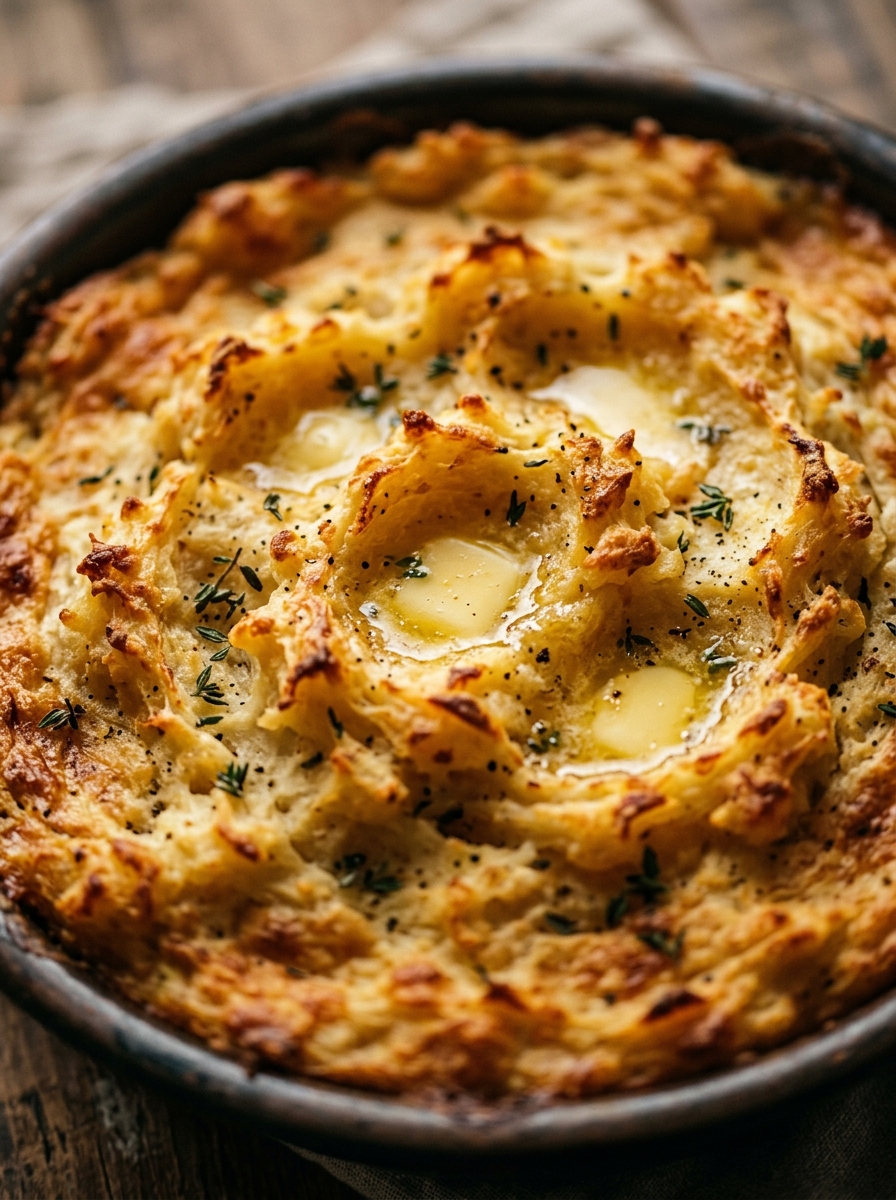
Red Leicester Special with Panhaggerty topping
RED LEICESTER PHOTO
England · Recipe No. 27
‘Wookey Hole’ Shepherd’s Pie
Somerset Parsley Mash
Cave Aged Cheddar
If you place an onion in the fridge and some cheese next to it, after a day or so, the cheese will start to pick up the flavour of the onion. The same happens when you store cheese in a cave, the cheese absorbs the aromas in the air and starts to develop a flavour from the cave. The damp, stony air gives many cave-aged cheeses a distinct taste and aroma, such as Roquefort and Kaltbach Gruyere. This is especially true with this traditional West Country Farmhouse Cheddar, matured in the magnificent underground spectacle that are the Wookey Hole Caves of Somerset, England.
This West Country masterpiece of a Shepherd’s Pie is all the better for the Cave-aged Cheddar topping!
https://www.wookey.co.uk/cave-aged-cheddar-cheese
Drink of choice
What goes better than a bottle of Somerset cider. In this case, a bottle of ‘Kingston Black’ from the ‘Sheppy’s’ Master of Cider Company, in Somerset, with over 200 years of Cider making experience.
https://www.sheppyscider.com/online-shop/ciders/
For the Filling
- 250g Minced pork
- 500g Minced beef
- 2 rashers Smoked Bacon
- 1 Cider Apple or Braeburn Apple
- 1 Bottle of cider
- 1 Large Onion
- Organic Chicken Stock
- Dried Sage
- ¼ Teaspoon of Ground bay leaves
- A pinch of freshly ground black pepper
For the Mash
- 500g (18oz) Potatoes
- 1 medium Onion
- A few large knobs of butter
- Fresh Parsley
- Sea-Salt & freshly ground black pepper
- Freshly Grated ‘Wookey Hole’ Cave aged Cheddar Cheese
‘Wookey Hole’ Shepherd’s Pie
Photo Wookey Hole
England · Recipe No. 28
The Shropshire Fidget Pie
Shropshire Russet Mash
Smoked Red Fox
Shropshire is a region to the West of Birmingham. Famous for its Iron buildings and structures, including the Iron bridge to the South East of Shrewsbury and The Flaxmill Maltings, Located actually in Shrewsbury, which is known as the world's first iron-framed building, paving the way for modern skyscrapers.
A fidget pie is an English pie containing layers of apple, cured pork, onion, and sometimes potato under a crimped, shortcrust pastry top. The pie is particularly popular in Shropshire, a county in the West Midlands, where it is made with sugar and sweet spices.
Topped with Smoked Red Fox Cheese from the Belton Farm cheese makers.
My recipe combined the Shepherd’s Pie and Fidget Pie, to give you a completely unique recipe!
Drink of Choice
Shropshire is known for its fine ales and ‘Shropshire Gold’ from the Salopian Brewery is a great choice to accompany this recipe.
https://www.beltonfarm.co.uk/our-brands/smoked-red-fox/
https://www.salopianbrewery.co.uk/core-beer/shropshire-gold/
For the Filling
- 750g Minced Pork
- 1 Onion, finely chopped
- 2 Large Cox Apples, sliced.
- 1 Tbsp butter
- 1 Garlic clove, minced
- 4 oz mushrooms, sliced
- 300ml of Turkey Stock
- 2 teaspoons of apple sauce
- 2 tsp marjoram
- Pinch of Nutmeg
- 1 Tbsp GF Plain flour (if using stock)
- Salt and pepper (to taste)
For the Mash
- 2 ½ lbs russet potatoes, cut into 1” cubes
- 1 egg yolk
- 50ml milk
- Smoked red Fox Cheese
- Salt and pepper to season
The Shropshire Fidget Pie
Fidget Pie Photo
England · Recipe No. 29
Christmas Shepherd’s Pie
England Roasted Potato Mash
Cheddar Cheese
Many people are looking for something different to have for the Christmas lunch and whilst you may not have considered Shepherd’s Pie, I promise you won’t be disappointed. This dish can also be made the day before, giving the cook more time to enjoy with family and friends on Christmas Day.
Goose meat is a rich, dark poultry with a deeply savory, slightly gamey flavor that is often compared to a cross between dark-meat turkey and duck or a grass-fed beef steak. Unlike chicken, an entire goose consists of rich, reddish-pink dark meat. This can be slow roasted and then roughly chopped, making it an ideal base for Shepherd’s Pie. Together with these seasonal ingredients, this is a luxury Shepherd’s Pie worth as your Christmas lunch.
Christmas really is the time we love to spend with our family and friends and definitely a good reason to turn off the mobiles and have a proper chat, no matter the subject.
Drink of choice
A nice burgundy goes well with this dish and for me, Meursault must be the best wine for this Christmas cracker. It’s expensive, but then it is Christmas!
For the Filling
- 750g Slow Roasted Goose, ‘Roughly chopped’.
- ¼ Small Swede
- 100g of baby whole carrots top and tail trimmed
- 1 Stick of celery finely chopped
- 100g of frozen peas
- Half cup of Cranberries
- 6 – 8 Shallots depending on size
- 100g of diced Chestnuts
- 300ml Chicken Stock (add the juices from the Goose)
- 1 teaspoon dried Sage, 1 teaspoon dried Oregano
- ½ teaspoon of ground bay leaves
- 1 dsp Cumberland sauce
- 2 dsp Marmalade
- Sea Salt & freshly ground Black Pepper to season
For the Mash
- 500g Potatoes (Lightly Roasted)
- A few large knobs of butter
- Sea-Salt & freshly ground black pepper
- Freshly Grated Cheddar Cheese to top
CHRISTMAS SHEPHERD’S PIE
Christmas Shepherd’s Pie
Ireland · Recipe No. 30
St Stephen’s Day Shepherd’s Pie
Ireland Russet Mash
Egg Yolk
This recipe is not a true Shepherd’s Pie as such, but a nice twist using seasonal ingredients. St Stephen’s day is 26th December, which is also known in many countries as Boxing Day.
Preheat your oven to 375F.
For the Filling
While the potatoes are cooking, make the pie filling.
In a large sauté pan, melt the butter. Add the chopped onion and sauté over medium heat until softened, 5 minutes. Add the leeks and garlic. Sauté for 5 minutes more, until the onions are completely soft.
Add the mushrooms, if using, and sauté 2-3 minutes.
Add the cream, stock or gravy, and marjoram. (If using stock, rather than gravy, sift 1 Tbsp of flour over the mixture in the pan and stir well.) Bring the mixture to a light simmer for 1-2 min.
Add the chopped meat and mix well.
Taste the mixture and adjust the salt and pepper as needed.
Remove the sauté pan from the heat and set aside.
Putting It All Together
Pour the meat mixture into a greased 8x8 baking dish and top it with dollops of the mashed potatoes.
Place the dish in the oven for 40-50 minutes, until the top is nicely golden and the filling is bubbly. (You may want to place aluminium foil lined baking sheet on the rack under your baking dish to catch any juices that bubble over.)
Remove the pie from the oven and let it rest for 5-10 minutes before serving.
For the Mash
To make the mashed potatoes, place the potatoes in a pot of boiling water and cook them until soft.
Drain the potatoes and return them to the pot, add the butter. Using an electric hand mixer, blend the potatoes until smooth. Add the egg yolk and milk to the potatoes and mix until combined
Season, to taste, with salt and pepper. Set the mashed potatoes aside.
Drink of Choice
As a first-century Jewish Christian living in the Mediterranean region, Saint Stephen almost certainly drank wine, which was the standard, safe daily beverage of the era. So for Boxing day, a glass of your favourite wine would be great, a nice rose goes really well with this dish.
For the Filling
- Tbsp unsalted butter
- 1 onion, finely chopped
- 1 small leek, cleaned and sliced
- 1 garlic clove, minced
- 4 oz mushrooms, optional, sliced
- ¼ c heavy cream
- 1 ¼ c chicken or turkey stock or turkey gravy
- 2 tsp marjoram
- 1 Tbsp GF Plain flour (if using stock)
- ¾ lb leftover turkey, cooked, diced
- ½ lb leftover ham, cooked, diced
- Salt and pepper (to taste)
For the Mash
- 500g Russet potatoes, washed, peeled, and chopped
- 1 Tbsp unsalted butter
- 1 egg yolk
- ¼ cup milk
- Salt and pepper (to taste)
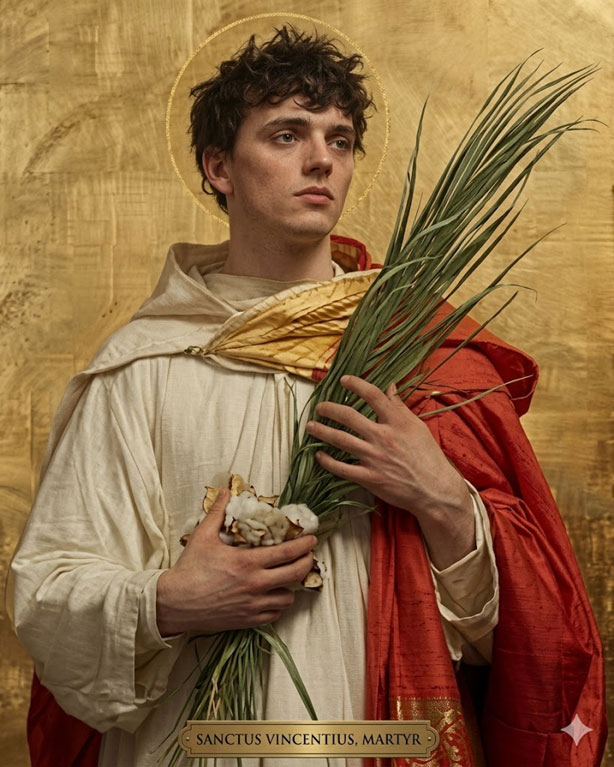
St Stephen’s Day Shepherd’s Pie
Saint Stephen
Isle of Man · Recipe No. 31
Loaghtan Lamb Shepherd’s Pie
Isle of Man ‘Panhaggerty Topping’
Grass Fed Vintage Cheddar
The Manx Loaghtan is a rare breed of sheep native to the Isle of Man, dating back more than 1,000 years.
It is sometimes spelled as Loaghtyn or Loghtan. The sheep have dark brown wool and usually four or occasionally six horns.
Almost taken to extinction, the Loaghtan Lambs was saved when a man called Ceaser Bacon who noticed the decline and "rounded up what he could" and, in 1895, he realised he only had four ewes that were fit to breed from.
Since then, Jenny Shepherd (with her apt surname) and her partner, Rawdon Hayne, own the world's largest flock of Manx Loaghtans on Ballacosnahan Farm and hope to raise awareness of the breed's commercial viability.
Ms Shepherd calls them "amazing sheep, their wool is fabulous", adding their meat was "more like venison than lamb, which absolutely lends itself to charcuterie".
My tribute to their efforts, I give you the truly Unique Loaghtan Lamb Shepherd’s Pie.
https://www.leicestershirecheese.co.uk
https://www.isleofmancreamery.com/products/cheese
Drink of Choice
The oldest brewery on the Isle of Man is ‘Okell’s Brewery’, dating back to 1850. For me their Okell’s Triumph Summer Ale would be my choice to go with this Shepherd’s Pie. Also giving a nod to the Triumphs that have raced at the world famous Isle of Man TT motorbike race.
https://okells.co.uk/products/
For the Filling
- 750g Minced Lamb
- 100g of Cooked Harricot Beans
- 1 medium Onion, finely diced
- 2 medium Carrots, diced
- 50g Marrow-Fat Peas
- 300ml Lamb Stock
- 50g Cumberland Sauce.
- ½ teaspoon Sea-Salt
- ¼ Teaspoon freshly ground Black pepper
For the ‘Panhaggerty Topping’
- 500g Potatoes
- 1 Large onion, very thinly sliced
- 50g (2oz) Butter
- Salt & Pepper to season
- 100g Grass Fed Vintage Cheddar
Loaghtan Lamb Shepherd’s Pie
Jenny Shepherd and Rawdon Hayne Photo
England · Recipe No. 32
Highlander Shepherd’s Pie
Highlands ‘Hunters’ Horseradish Mash
Fresh Chives
Wild meats give a great flavour to a Shepherd’s Pie. Balance the richness with vegetables and berries to lighten the dish and produce a gorgeous deep rich gravy. Sweeten the mash with parsnips, just wonderful.
https://www.castlegame.co.uk/shop
Drink of choice
The ultimate Whiskey Mac, a blend of Single Malt Scotch Whisky and Ginger wine, some would say sacrilege, but just try it.
https://www.malts.com/en-gb/lagavulin
https://crabbiesgingerwine.co.uk
For the Filling
- 225g (9oz)of Minced Venison
- 225g (9oz) Minced
- 2 Medium Carrots, peeled and finely diced
- 50g Swede, peeled and diced
- 1 large Onion, peeled and finely diced
- 50g of Pitted Dates, finely choped
- 2 Garlic Cloves, finely minced
- ½ teaspoon of dried Sage, ½ teaspoon of dried Thyme
- ½ pint Chicken stock, ½ pint Beef stock
- 1 small glass of good port
- Freshly ground Black pepper
For the ‘Hunters’ Horseradish Mash
- 1 Kg Potatoes
- 2 dstsp Creamed Horseradish
- 50g (2oz) Fresh Chives
- 50g (2oz) Butter
- Sea-Salt & freshly ground Black pepper
Highlander Shepherd’s Pie
HIGHLANDER PHOTO
Scotland · Recipe No. 33
The Lowlander
Scotland Traditional Mash
Scottish Cheddar
The Scottish Lowlands consist of central and southern Scotland, stretching from the northEnglish border up to the Cities of Glasgow and Edinburgh, making it the most populated area of Scotland. As well as homing Scotland’s two largest cities, the southern areas of the lowlands are predominantly farmland.
Lowland lambs eat rich valley grass to reach market weight quickly and the Lowland rams are often crossed with hardy hill-cross ewes (like Mules) to produce strong meat lambs. The area is also known for producing potatoes, root vegetables and Musselburgh Leeks, all the right ingredients for a great Shepherd’s Pie.
The lowlands are also known for Stovies, a traditional Scottish comfort food made by slowly stewing potatoes and onions in fat or stock, usually with leftover roast meat or mince. The name comes from the Scots verb "to stove," meaning to stew or braise. This makes a great base for our lowland Shepherd’s Pie.
Why not try a Clootie Dumpling as your dessert. A clootie dumpling is a traditional Scottish dessert made from flour, dried fruit, suet, and warm spices. Its name comes from the word "cloot," which is Scots for the cloth bag used to boil the pudding. Perfect with lashings of hot custard!
https://www.tongmasterseasonings.com/scottish-clootie-dumpling-fruit-pudding-1kg-pack-tm00437?search=clootie%20dumpling&description=true
https://theethicaldairy.co.uk/cheese-shop
Drink of choice
For Non-alcoholic drink, it has to be the national soft drink of Scotland, ‘IrnBru’. This bright orange sweet treat is a national treasure.
Alternatively, if you wanted the most popular beer in the lowlands, it has to be Tennents Lager. A cold pint of this brew, goes down very nicely with my Lowlands Shepherd’s Pie.
https://irn-bru.co.uk/
https://www.tennents.com/uk/
For the Filling
- 225g Minced Lowland Lamb
- 225g Minced Lowland Beef
- 2 Medium Carrots, peeled and finely diced
- 50g Swede, peeled and diced
- 1 large Mussleburgh Leek, peeled and finely diced
- 2 Garlic Cloves, finely minced
- ½ teaspoon of dried Sage, ½ teaspoon of dried Thyme
- 300ml pint Lamb stock
- 1 small glass of good port
- Freshly ground Black pepper
For the Mash
- 1 Kg Potatoes
- 50g (2oz) Butter
- Sea-Salt & freshly ground Black pepper
- Grated Traditional Scottish Cheddar
The Lowlander
LOWLANDS PHOTO
Scotland · Recipe No. 34
The Scottish Islander with Seaweed
Isle of Lewis Traditional Mash
Isle of Mull Farmhouse
Scotland has around 900 offshore islands (with over 790 officially recognized by major authorities), nearly 100 of which are permanently inhabited. These islands are scattered across major archipelagos and coastal firths, featuring distinct groups, smaller islets, and fresh-water lochs.
For my ’Islander’ recipe, I am going to concentrate on the Isle of Lewis, one of the largest of the Scottish islands. The capital is Stornaway, where the Best Black pudding in the world is made (my opinion!).
The Stornaway & Stornaway Black pudding tastes like no other, with its soft crumbly texture, it’s perfect to add to your Shepherd’s Pie meat mixture.
Equally, the addition of a little Scottish Seaweed to the meat mixture, elevates the flavour to a new level. Our supplier is Maxime from Coeur Savage who sources the best of foraged ingredients in Scotland, supplying Chefs and Cooks around the British Isles.
Give it a try!
https://www.charlesmacleod.co.uk/products/black-pudding
https://coeursauvage.scot
https://shop.isleofmullcheese.co.uk/products/isle-of-mull-traditional-farmhouse-cheese
Drink of choice
Try ‘Black Isle Goldfinch’ Ale from the Isle of Harris Brewery, a GF beer, perfect with my Islander Shepherd’s Pie. And maybe a wee dram to finish, with a single malt from the ‘Abhainn Dearg Distillery’.
https://www.isleofharrisbrewery.com
For the Filling
- 750g Minced Lamb
- 2 Medium Carrots, peeled and finely diced
- 50g Swede, peeled and diced
- 1 large Mussleburgh Leek, peeled and finely diced
- 2 Garlic Cloves, finely minced
- 300ml pint Lamb stock
- 1 small glass of Sweet Sherry or Port
- 50g of Dried Truffle Seaweed
- Freshly ground Black pepper
For the Mash
- 1 Kg Potatoes
- 50g Butter
- Sea-Salt & freshly ground Black pepper
- Isle of Mull Traditional Farmhouse Cheese
- Chopped fresh parley
The Scottish Islander with Seaweed
THE ISLANDER PHOTO
Scotland · Recipe No. 35
Robbie Burn’s Shepherd’s Pie
Scotland ‘Clapshot’ Mash
Neeps & Tatties
According to the ‘Oxford Companion to Food’, once upon a time, Scotland made its Shepherd’s Pies with pastry instead of mashed potatoes. However, in this recipe we will be using mash and combining some favourite traditional Scottish foods. These include Scotch Beef and one of Robbie Burns favourite… Haggis, with ‘Clap-shot Mash’ (Neeps & Tatties). There are two ways of cooking this dish. One is to mix the Haggis in with the minced beef and the other is to cook the Haggis separately and add it as a layer on top of the beef, before adding the ‘Clap-shot’ mash.
The overall finish of this version is similar to the way the Germans layer their Shepherd’s Pie and it makes a great change from the normal version.
‘Clap-shot Mash’ originates from the Isle of Orkney in Scotland and is said to be a combination of mashed potatoes, Swede or turnip with added Chives and butter to enhance the flavour.
https://www.macsween.co.uk/products/delicious-every-day-haggis/
Drink of Choice
There are many good breweries in Scotland and my personal favourite is ‘Innis and Gunn’. The particular beer I recommend is the Innis & Gunn ‘Original Ale’, which is aged in Bourbon whisky barrels giving the beer hints of Vanilla and Toffee to the overall flavour. It also increases the strength to around 6.6% and it’s one of the best Ales I’ve ever tasted.
For the Filling
- 500g (18oz) Minced Aberdeen Angus beef
- 250g (9oz) Macsween Haggis
- 1 Medium Onion, finely diced
- 100g Medium Carrots, cooked and mashed
- 100g Swede, cooked and mashed
- 50g Marrow Fat Peas
- 300ml pint Beef Stock
- 1 tsp of Ground Bay leaves
- A srig of Rosemary and one of Thyme
- 1 desert-spoon Worcester sauce
- Sea-Salt & freshly ground Black pepper
For the ‘Clapshot’ Neeps & Tattie Mash
- 1Kg Potatoes
- 0.5Kg Neeps (Swede)
- 50g Butter
- Sea-Salt & freshly ground Black pepper
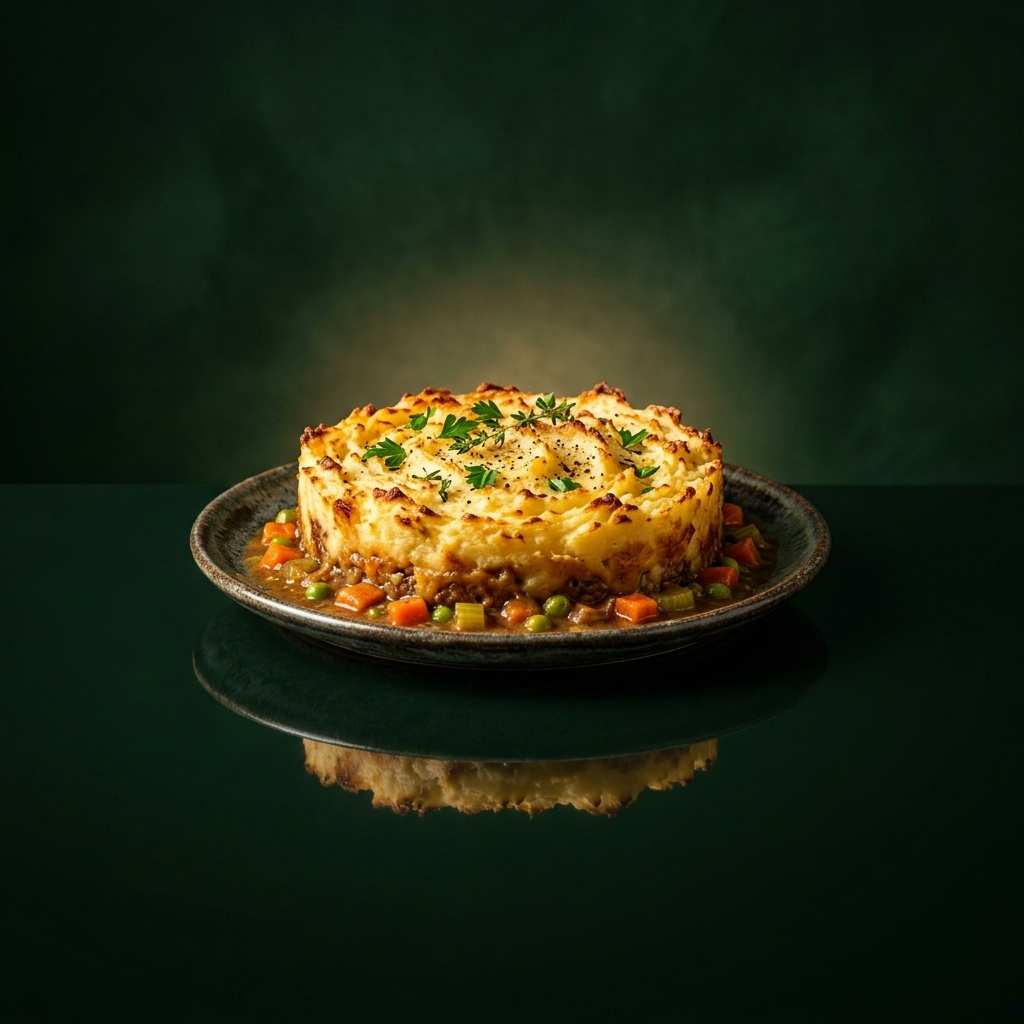
Robbie Burn’s Shepherd’s Pie
ROBBIE BURNS PHOTO
Scotland · Recipe No. 36
St Andrews Feast – ‘Surf & Turf’ Cottage Pie
Scotland Neep & Tattie Mash
Vintage Scottish Cheddar
Saint Andrew is the patron saint of Scotland, Greece, Russia, Ukraine, and Romania, as well as fishermen, fishmongers, and singers. He is recognized as one of the first disciples of Jesus and the older brother of Saint Peter.
St. Andrew's Day (also known as the Feast of St. Andrew) is celebrated annually on November 30. It honors the life, teachings, and martyrdom of the Apostle Andrew. According to Christian tradition, he was martyred in Patras, Greece, by being crucified on an X-shaped cross, as he felt he was unworthy to die on the same style of cross as Jesus. He officially became the patron saint of Scotland in 1320, chosen because his X-shaped cross (the saltire) is featured on the Scottish national flag.
The idea of the Giant prawns is to sauté these in Garlic Butter once the pie has been assembled and to place these on top in the centre of each portion. These are to be eaten first, almost like a starter!
The recipe is dedicated to St Andrew and all my Scottish friends new and old.
https://thescottishbutcher.com/the-simon-howie-gluten-free-range/
Drink of choice
The St. Andrew's Cocktail: A classic mix of Scotch whisky, orange juice, and a honey-whisky liqueur. You will need, 1 part Scotch whisky, 1 part orange juice (freshly squeezed is best), 1 part honey-whisky liqueur like Drambuie, Ice cubes. Cocktail shaker and strainer, Cocktail glass.
https://www.ballantines.com/en/range/
https://drambuie.com/en-gb/
For the Filling
- 750g pounds Best Scottish Beef
- 200g GF Wee Haggis
- 4 Extra Large Shell on Prawns
- 1 medium Onion, chopped
- 1 large Carrot, finely sliced
- 50g Frozen Peas
- 4 Garlic Cloves, finely minced
- 1 ½ teaspoons Fresh Thyme, finely chopped
- 1 tablespoons Tomato Puree
- 2 teaspoons Worcestershire Sauce
- Salt & Ground Black Pepper to season
- 300ml Beef Stock
For the Neep & Tattie Mash
- 700g Potato, peeled and diced
- 300g Swede, peeled and diced
- 50g (2oz) Butter
- Milk
- 2 Egg Yolks
- Salt and Ground Black Pepper to season
- 100g Grated Vintage Scottish Cheddar Cheese
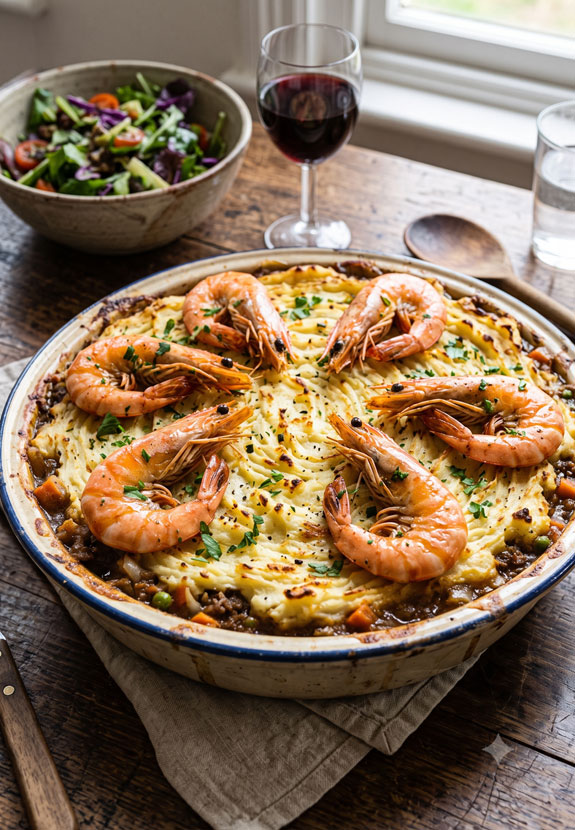
ST ANDREWS FEAST
St Andrew Feast
Scotland · Recipe No. 37
THE BIG YIN’S Shepherd’s Pie
Scotland Neep & Tattie Mash
Vintage Scottish Cheddar
Sir Billy Connelly is one of my favourite comedians and a bit of a Hero. His no-nonsense comedy and whacky style of humour has kept the British Isles in fits of laughter for many decades.
Sir Billy is truly deserving of a place in my recipe book, as he encapsulates all things good about the Scots.
https://thescottishbutcher.com/the-simon-howie-gluten-free-range/
Drink of choice
The St. Andrew's Cocktail: A classic mix of Scotch whisky, orange juice, and a honey-whisky liqueur. You will need, 1 part Scotch whisky, 1 part orange juice (freshly squeezed is best), 1 part honey-whisky liqueur like Drambuie, Ice cubes. Cocktail shaker and strainer, Cocktail glass.
https://www.ballantines.com/en/range/
https://drambuie.com/en-gb/
For the Filling
- 750g pounds Best Scottish Beef
- 200g GF Wee Haggis
- 4 Extra Large Shell on Prawns
- 1 medium Onion, chopped
- 1 large Carrot, finely sliced
- 50g Frozen Peas
- 4 Garlic Cloves, finely minced
- 1 ½ teaspoons Fresh Thyme, finely chopped
- 1 tablespoons Tomato Puree
- 2 teaspoons Worcestershire Sauce
- Salt & Ground Black Pepper to season
- 300ml Beef Stock
For the Neep & Tattie Mash
- 700g Potato, peeled and diced
- 300g Swede, peeled and diced
- 50g (2oz) Butter
- Milk
- 2 Egg Yolks
- Salt and Ground Black Pepper to season
- 100g Grated Vintage Scottish Cheddar Cheese
THE BIG YIN
THE BIG YIN’S Shepherd’s Pie
Wales · Recipe No. 38
Pastai Bugeilaid - Traditional Welsh Shepherd’s Pie
Wales Buttered Leek Layer
Vintage Cheddar
Obviously for this recipe we are using best Welsh grass-fed Lamb, with the best vegetables and Potatoes available from Beautiful Wales.
Wales has been known for many years as growing the Best Lamb and my recipe here will hopefully bear testimony to this. I would heartily recommend Gwaun Valley Meats for the best Saltmarsh Lamb.
Our friend Gareth and his family have lived in Wrexham Wales for more than 30 years and I have known him for more than 16 years. For his sins, Gareth is an avid Wrexham FC supporter and has spent many a cold afternoon cheering on his team hoping for another Wrexham victory. There is nothing better to celebrate a win than one of my Shepherd’s Pies and if there’s anyone who deserves a proper Shepherd’s Pie dedication, it’s Gareth.
This recipe includes an extra layer of Sautéd buttered Leeks on top of the mash, before you add the Cheese.
https://gwaunvalleymeats.co.uk
https://chunkofcheese.co.uk
Drink of choice
For Gareth, It has to be a pint of real ale and nothing hits the spot more than a bottle or two, steady Gareth, of Magic Dragon Ale.
https://magicdragonbrewing.com/product/beer-ale-craft-gift-welsh-selection-box/
For the Filling
- 450g Minced Welsh Lamb.
- 1 Stick of Celery finely diced
- 1 large carrot finely diced
- 1 cup of fresh shelled peas
- 1 large Leek, diced
- 1 large Clove Garlic finely minced
- 250ml Glass of Merlot
- 200ml Lamb Stock
- Ground bay leaves
- Freshly ground Black pepper
For the Mash
- Maris Piper Potatoes, Boiled and Mashed
- 1 Small Leek, finely chopped and Sautéd
- A few large knobs of butter
- Sea-Salt & freshly ground black pepper
- A pinch of Nutmeg
- Freshly grated Vintage Cheddar to top
Pastai Bugeilaid
GARETHS FAMILY PHOTO
Wales · Recipe No. 39
St David’s The Patron Saint of Vegetarians
Wales Cabbage Mash
‘Collier’s’ Welsh Cheddar
Historic tales suggest that St David was a vegetarian who only ate bread, herbs and vegetables and who drank just water. For this reason, he is known as the patron Saint of Vegetarians and Vegans!
Our dear Friends Olwen and Michael were committed Vegetarians and we have enjoyed many a meal with them, both at home and on holidays around the world. I don’t think I have ever laughed so much in their company and these two beautiful people will be sorely missed. It’s only fitting that I dedicate this recipe to Olwen and Michael, Cheers guys, RIP.
http://www.collierscheese.com/our-range/colliers-powerful-cheddar/
Drink of Choice
Now, anyone who knew Olwen and Michael, and there are many, many people that have been on a drinking session with them, know that they defy all normal drinking boundaries. I remember a number of years ago, upon checking out of our hotel with Olwen and Michael, on a Skiing holiday in Val D’isere, that our bar bill was actually more than the Hotel accommodation! What a great holiday!
So, it is somewhat ironic that St David was tactually Teetotal. Truly one of the best drinks in the world must surely be crystal clear still mineral water. No additives, no calories and only natural minerals, filtered over hundreds of years. Try one of Wales’s premier mineral water bottling companies, with the unique blue glass bottles.
https://tynant.com/the-water/
For the Filling
- 750g Diced Vegetables
- (Carrots, Swede, Turnip, Cauliflower)
- 1 Large Leek, finely diced
- 100g (4oz) Frozen Peas
- 2 Umami Stock
- 1 desert-spoon of Worcester Sauce
- 1 teaspoon of Ground bay leaves
- Sea-Salt & freshly ground Black pepper
For the Mash
- 500g Potatoes
- 100g (4oz) Green Cabbage
- 4 Spring Onions - very finely diced
- A dash of Olive Oil
- Pinch of Nutmeg
- Sea-Salt & freshly ground Black pepper
- Freshly Grated ‘Collier’s’ Welsh Cheddar (for the Vegetarians)
OLWEN AND MICHAEL COMEDY LEGENDS
Olwen & Michael were always great Hosts! RIP, you beautiful people.
Wales · Recipe No. 40
Caws Pobi – ‘Welsh Rarebit’ topped Shepherd’s Pie
Mid-Wales Welsh Rarebit Topping
Vintage Cheddar
It is suggested that Welsh rarebit originated in Great Britain somewhere during the 16th or 18th century and is tied to Welsh cuisine through a similar old dish called Caws Pobi (toasted cheese). First recorded in English literature in 1547 by Andrew Boorde, who noted that Welshmen loved "cawse boby". This Shepherd’s Pie hasn’t just got a cheese topping, this has the full Welsh Caws Pobi Style Rarebit topping.
To make a classic Welsh rarebit, melt 25g butter, stir in 25g flour, then gradually whisk in 120ml ale, 1 tsp English mustard, and 1 tbsp Worcestershire sauce. Off the heat, fold in 140g grated mature cheddar until smooth. Spread over the mash and grill until bubbling and golden.
Our lovely friend Sandy Craig lives near the source of the River Severn, in Mid-Wales. She and her family are real lovers of Shepherd’s Pie and Sandy is a great artist to boot. Family meals time are phone free in Sandys House and instead, full of creative conversation!
https://gwaunvalleymeats.co.uk
https://chunkofcheese.co.uk
Drink of choice
Wales has some really great craft cider makers and any of the ciders from Gwynt Y Ddraig would be a great match for this Pie.
www.gwyntcidershop.com
For the Filling
- 450g Minced Welsh Lamb
- 1 Stick of Celery finely diced
- 1 large carrot finely diced
- 1 cup of frozen peas
- 1 large Leek, diced
- 2 large Garlic cloves, finely minced
- 150ml Glass of Malbec Red wine
- 150ml Lamb Stock
- Ground bay leaves
- A sprig of Rosemary and one of Thyme
- Freshly ground Black pepper
For the Mash
- Maris Piper Potatoes, Boiled and Mashed
- 75g Butter
- 25g GF flour
- Sea-Salt & freshly ground black pepper
- A pinch of Nutmeg
- Freshly grated Vintage Cheddar to top
- English Mustard
- Welsh Ale
- Worcester Sauce
Wales · Recipe No. 41
Sir Anthony Hopkins ‘Not so Secret’ Recipe
Wales Leek Mash
A hint of Cinnamon
This recipe is dedicated to one of my favouite actors of all time. Sir Anthony Hopkins' famous family recipe (often called his father's Welsh Shepherd’s Pie) features a secret twist: chopped leeks cooked in butter and mashed directly into the potatoes, along with a hint of cinnamon in the minced beef base.
Instructions
Make the Meat Filling: Sauté the onions until soft. Add the carrots and minced beef, cooking until browned. Stir in the garlic, thyme, rosemary, cinnamon, salt, pepper, and parsley. Sprinkle flour over the mix, then pour in hot beef broth combined with tomato paste and peas. Cover and simmer until rich.
Make the Leek Mash: Boil the potatoes in salted water until tender. Separately, cook the chopped leeks in butter until soft. Drain the potatoes and mash them thoroughly together with the cooked leeks, extra butter, and milk or cream.
Assemble and Bake: Transfer the meat mixture into a greased baking dish, spread the leek-mashed potatoes smoothly over the top, and rough up the surface with a fork. Bake at 400°F (approx. 200°C) for 25 minutes until golden and bubbling.
Drink of Choice
You know this already, it has to be a nice Chianti! I know it’s Corny, but ironically a good Chianti goes very well with a Shepherd’s Pie.
Castello di Monsanto, and Marchesi Antinori consistently craft the highest-rated bottles of Chianti. Look for the Black Rooster seal on the neck, which means it is a Chianti Classico from the best historic zone.
https://www.castellodimonsanto.it/en
https://www.antinori.it/en/tenuta/estates-antinori/antinori-nel-chianti-classico-estate/
For the Filling
- 1 lb minced beef (or minced lamb)
- 2 chopped medium onions
- 1 large carrot, diced
- chopped parsley
- Garlic, finely minced
- A sprig of Fresh thyme and one of Rosemary
- A pinch of cinnamon,
- salt, pepper
- GF flour
- tomato paste
- hot beef broth
- Optional: frozen peas
For the Mash
- 2 lbs Potatoes
- 2 Chopped leeks
- Butter
- Milk or cream
Sir Anthony Hopkins ‘Not so Secret’ Recipe
ANTHONY HOPKINS PHOTO
Northern Ireland · Recipe No. 42
The Ulster Champ - Pióg an aoire
Northern Ireland ‘Colcannon’ Mash
‘Coolattin’ Irish Cheddar
St. Patrick’s day is celebrated not only throughout both Southern and Northern Island, but indeed much of the British Isles and even further afield. St Patrick, the Patron Saint of Ireland, was actually born in Britain (not Ireland) near to the end of the 4th Century. At age 16 he was kidnapped by Irish raiders and sold as a slave to a Celtic priest in Northern Ireland. After tolling for six years as a Shepherd, he escaped back to Britain. It is therefore fitting that we celebrate St. Patrick with a Shepherd’s Pie.
https://coolattincheddar.ie/product/coolattin-mature-18-month/
Drink of choice
Maine 1949 Brown Lemonade is made by Maine Soft Drinks, a family-run soft drinks company based in Ballymoney, Northern Ireland. The company was founded by John Harkness in 1949 and is named after the River Maine in County Antrim. This alternative to traditional clear Lemonade infused raw cane sugar, giving the lemonade a nice toffee flavour..
https://westmeathwhiskeyworld.wordpress.com/category/irish-whiskey/
For the Filling
- 750g (26.5oz) Minced Irish beef
- 1 large Onion
- Carrot
- Peas
- Organic Beef Stock
- A bottle of original Guinness (Not draught)
- Worcester Sauce
- Ground Bay leaves
- Sea-Salt & freshly ground Black pepper
For the ‘Colcannon’ mash
- 500g (18oz) Potatoes
- 100g (4oz) Green Cabbage, preferably Savoy.
- 12 Spring Onions
- 50g (2oz) Butter
- Pinch of Nutmeg
- Sea-Salt & freshly ground Black pepper
- 100g (4oz) Freshly Grated ‘Coolattin’ Irish Cheddar
The Ulster Champ - Pióg an aoire
Northern Ireland Photo
Ireland · Recipe No. 43
Pióg an aoire - Irelands Dubliner with Colcannon mash
Dublin ‘Colcannon’ Mash
‘Coolattin’ Irish Cheddar
St. Patrick’s day is celebrated not only throughout both Southern and Northern Island, but indeed much of the British Isles and even further afield. St Patrick, the Patron Saint of Ireland, was actually born in Britain (not Ireland) near to the end of the 4th Century. At age 16 he was kidnapped by Irish raiders and sold as a slave to a Celtic priest in Northern Ireland. After tolling for six years as a Shepherd, he escaped back to Britain. It is therefore fitting that we celebrate St. Patrick with a Shepherd’s Pie.
https://coolattincheddar.ie/product/coolattin-mature-18-month/
Drink of choice
It’s got to be a pint or two, of extra cold draught Guinness.
For the Filling
- 750g (26.5oz) Minced Irish beef
- 1 large Onion
- Carrot
- Peas
- Organic Beef Stock
- A bottle of original Guinness (Not draught)
- Worcester Sauce
- Ground Bay leaves
- Sea-Salt & freshly ground Black pepper
For the ‘Colcannon’ mash
- 500g (18oz) Potatoes
- 100g (4oz) Green Cabbage, preferably Savoy.
- 12 Spring Onions
- 50g (2oz) Butter
- Pinch of Nutmeg
- Sea-Salt & freshly ground Black pepper
- 100g (4oz) Freshly Grated ‘Coolattin’ Irish Cheddar
Pióg an aoire - Irelands Dubliner
RECIPE 43 PHOTO
Ireland · Recipe No. 44
St Patricks Feast
Ireland ‘Colcannon’ Mash
‘Coolattin’ Irish Cheddar
St. Patrick’s day is celebrated not only throughout both Southern and Northern Island, but indeed much of the British Isles and even further afield. St Patrick, the Patron Saint of Ireland, was actually born in Britain (not Ireland) near to the end of the 4th Century. At age 16 he was kidnapped by Irish raiders and sold as a slave to a Celtic priest in Northern Ireland. After tolling for six years as a Shepherd, he escaped back to Britain. It is therefore fitting that we celebrate St. Patrick with a Shepherd’s Pie.
This recipe is even more special and dedicated to the most authentic Irish man we know, our Friend Harry. Not only has Harry not lost his accent in all the years we have known him, but he also plays the best Irish music, with his lovely wife Sharon.
https://coolattincheddar.ie/product/coolattin-mature-18-month/
Drink of choice
It’s got to be a pint or two, of stout still, but this time, how about another grand tipple, Murphys Irish Stout
https://www.murphys.com
For the Filling
- 750g (26.5oz) Minced Irish beef
- 1 large Onion
- Carrot
- Peas
- Organic Beef Stock
- A bottle of original Guinness (Not draught)
- Worcester Sauce
- Ground Bay leaves
- Sea-Salt & freshly ground Black pepper
For the ‘Colcannon’ mash
- 500g (18oz) Potatoes
- 100g (4oz) Green Cabbage, preferably Savoy.
- 12 Spring Onions
- 50g (2oz) Butter
- Pinch of Nutmeg
- Sea-Salt & freshly ground Black pepper
- 100g (4oz) Freshly Grated ‘Coolattin’ Irish Cheddar
St Patricks Feast
ST PATRICKS FEAST PHOTO
Good Health & Nutrition
553 kcal per portionOne of the things I am advocating in my book is to make my Shepherd’s Pie recipes as part of your weekly diet and to ensure it helps meet the NHS (UK) or NIH (US) guidelines for nutrition and health. At 553 calories per portion, this is a very healthy food option.
My Shepherd’s Pie recipes are designed to provide you and your family with a good healthy balance of meat, potato and vegetables, providing essential vitamins, minerals, proteins, carbohydrates and fibre. All my recipes are Gluten Free and if you wish, you can also use dairy alternatives where needed.
Most of my recipes allow for around 100g meat, 100g of potatoes and 100g veg per person.
| Ingredient | Calories kcal | Fat g | Carbs g | Protein g |
|---|---|---|---|---|
| 100g Lamb Mince (20% fat) | 245 | 19.86 | 0.0 | 16.67 |
| 100g Potato (raw/boiled) | 77 | 0.17 | 20.67 | 2.0 |
| 100g Mixed Vegetables | 66.67 | 0.27 | 13.33 | 2.66 |
| 25g Butter | 179 | 20.25 | 0.15 | 0.2 |
| 50ml Whole Milk | 32 | 1.8 | 2.4 | 1.6 |
| 2 Stock Cubes | 31 | 0.6 | 4.1 | 2.1 |
| Total | 553 | 37.85 | 33.65 | 20.3 |
By comparison
- Spaghetti Bolognese700 kcal
- Big Mac & Fries for one846 kcal
- Large Cod & Chips with mushy peas1,100 kcal
- 11” Pepperoni Pizza1,400 kcal
- Average Chinese takeaway2,200 kcal
- Average Indian takeaway2,200 kcal
With a good size portion of Shepherd’s Pie coming in at 553 calories, this really is a healthy option!
A balanced diet should be not only healthy, but also include home cooked comfort food for the soul, provided it keeps you within the recommended intake guidelines.
In my recipes, I have used the current health guidelines to ensure that the suggested amount of protein and carbohydrates meet the requirements and at the same time, give a reasonable portion to satisfy the hungriest of souls.
Find a Supplier Near You
Directories & ConversionsButchers Shop Directory
Find a butchers shop near you.
Farm Shop Directory
Find a farm shop near you.
Weight & Measurement Conversion
| Measurement | Imperial | Metric |
|---|---|---|
| Weight | 1 oz | 28 g |
| Weight | 4 oz | 115 g |
| Weight | 8 oz | 225 g |
| Weight | 1 lb | 450 g |
| Weight | 2 lb 3 oz | 1 kg |
| Volume | 1 fl oz | 30 ml |
| Volume | 1 pint (UK) | 568 ml |
| Volume | 1¾ pints | 1 litre |
| Length | 1 inch | 2.5 cm |
| Oven | 350°F / Gas 4 | 180°C |
| Oven | 400°F / Gas 6 | 200°C |
Index
England & the Isle of ManShepherd’s Pie from England
Shepherd’s Pie from the Isle of Man
Index
Scotland, Wales & IrelandShepherd’s Pie from Scotland
Shepherd’s Pie from Wales · Pastai Bugeiliaid
Northern Ireland
Southern Ireland
Bonus
Suppliers Index
With thanks to our suppliersButchers & Meat Suppliers
Farm Shops
Cheese Suppliers
Herbs, Spices & Other Ingredient Suppliers
Beer & Wine Merchants
Soft Drink Suppliers